

Accessories
Drill Stop Collars
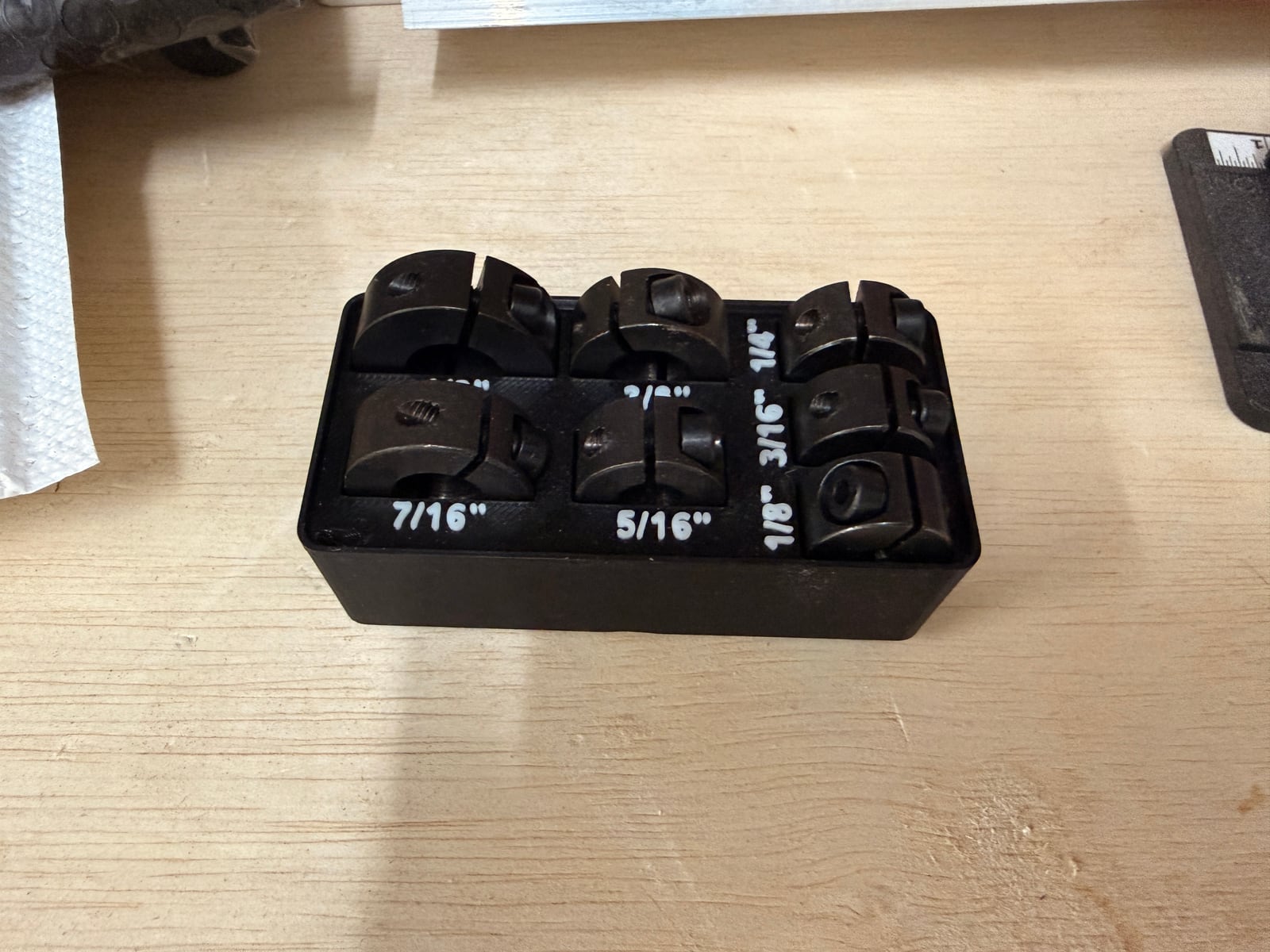
A stop collar is a metal ring with a setscrew that clamps onto a drill bit shank. When the collar reaches the surface, the bit stops. That is the whole mechanism, and it costs a few dollars.
It solves a problem tape does not really solve. The usual improvised version is a flag of masking tape wrapped round the bit, which works right up until the tape creeps, or the chips pack against it, or you are drilling a run of forty shelf-pin holes and cannot tell by eye whether you are at the line or five turns past it. A collar is positive: the bit physically cannot go further.
Where it earns its keep
- Blind holes, where the whole job is not coming out the other side -- shelf pins, dowels, hardware mortises.
- Repeat depth across many holes. Set once, drill fifty, every one the same.
- Counterbores at a consistent depth so the plugs sit right.
- Hinge and hardware cups, where a fraction too deep means the hinge sits proud and the door will not close.
Using them well
- Set the depth against the actual bit, not a ruler measurement. Stand the bit next to the work, mark where you want it to stop, slide the collar there.
- Tighten onto the flat of the shank if there is one. On a round shank, tighten firmly and check the setting after a few holes -- collars do creep under repeated hammering.
- Two collars, tightened against each other, will not creep. Worth doing on a long production run.
- Clear the chips. A collar makes it easy to keep drilling into a hole packed solid with waste, which burns the bit and the wood. Peck the bit out regularly.
- It bears on the surface. On a soft or finished workpiece, that steel face can bruise. Put a scrap of card or a washer of masking tape under it.
Collars are sized to the shank, so a set covers the bits you own rather than the holes you drill. Match the set to your bit index.
Images
Product: A set of split-ring stop collars, 1/8in to 1/2in, sized to clamp onto matching drill bit shanks.