

Accessories
Guide Rail Clamps
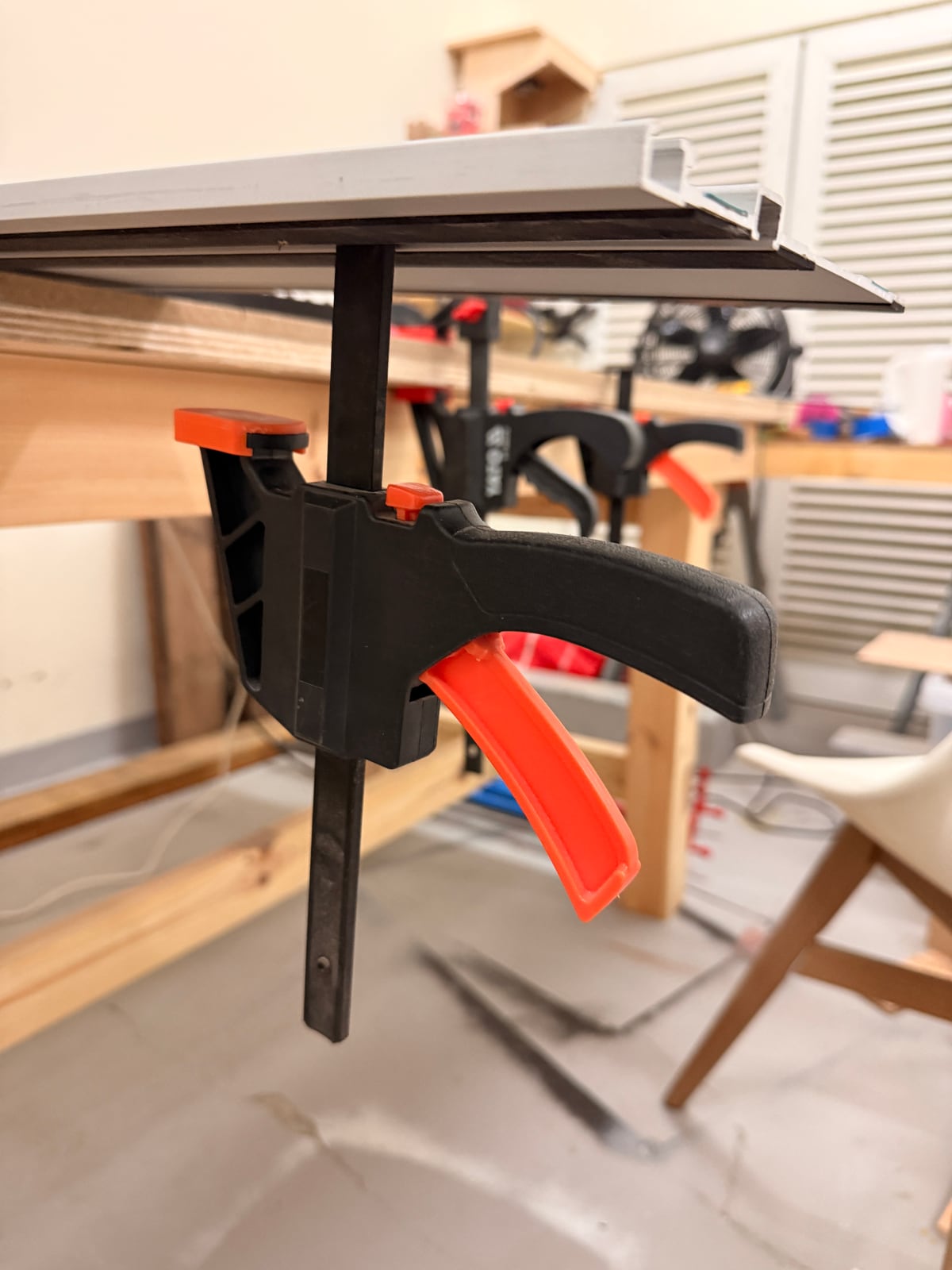
A guide rail clamp has a flat, wide head profiled to slide into the T-slot machined into the underside of a track saw rail. It pulls the rail down onto the workpiece and clamps both to the bench or trestles.
The shape is the point. An ordinary F-clamp over the top of a rail is directly in the path of the saw, and a quick-clamp beside the rail does not hold the rail itself down. The rail clamp engages from underneath and leaves the entire top surface clear.
Do you need them
Often not. The anti-slip strips on a rail's underside grip well enough for most cuts, and plenty of people cut for years without clamping. Where clamps stop being optional:
- Bevel cuts. The saw is pushing sideways as well as forward, and an unclamped rail can walk.
- Short offcuts, where there is not enough rail bearing on the workpiece for the strips to hold.
- Overhead or vertical work, obviously.
- Slick surfaces -- melamine, laminate, anything sealed.
- Plunge starts in the middle of a panel, where the initial bite can kick the rail.
Notes
- Two, at the ends. One clamp in the middle lets the rail pivot.
- Do not overtighten on thin stock. The clamp pulls the rail down, and enough force will bow a thin panel up between the supports and change the cut line.
- Check the head clears your saw before the blade finds out for you. Some low-profile saw bases foul some clamp heads.
- They fit the slot, not the brand. Rail slot profiles differ; a clamp for one system may not enter another.
Images
Product: A quick-release clamp engaged in the T-slot on the underside of a guide rail, gripping the workpiece from beneath.