

Wood Species
Acacia / Monkeypod
Albizia saman, Acacia spp.
- Janka hardness
- 900 lbf
- Specific gravity
- 0.6
- Workability
- Easy and pleasant; interlocked grain tears out and quality varies enormously depending on what you actually bought
If you've bought a cutting board, salad bowl, or live-edge slab table in the last decade, there's a good chance it was labelled "acacia" and a good chance nobody involved could tell you which species. This entry exists mostly to sort that out.
What "acacia" means on a price tag
Almost nothing specific. The label gets applied to:
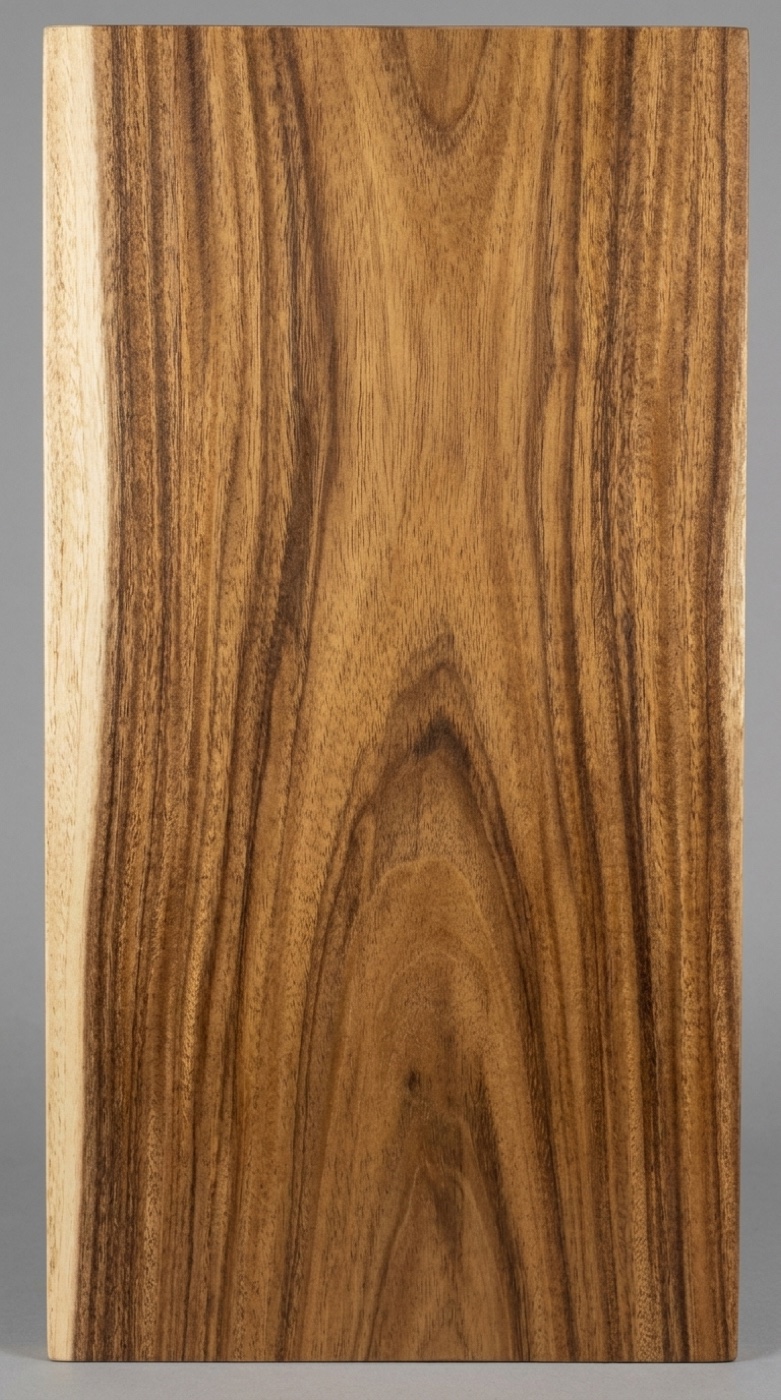
- Monkeypod (Albizia saman) — the big one. Fast-growing tropical tree with an enormous spreading crown, producing wide slabs with dramatic dark heartwood, pale sapwood, and wavy figure. Most live-edge "acacia" tables are this.
- Various true Acacia species — including plantation-grown Asian acacias (A. mangium, A. auriculiformis) that make up most cheap acacia kitchenware.
- Australian blackwood (A. melanoxylon) — a genuinely fine furniture and instrument wood, much better than the category average.
- Koa (A. koa) — Hawaiian, gorgeous, expensive, and in a different league entirely.
The practical upshot: "acacia" tells you roughly what it'll look like and almost nothing about density, stability, or quality. Two acacia cutting boards can be quite different products.
Why it's everywhere
Monkeypod and plantation acacias grow fast, reach large diameters quickly, and come from managed plantations across Southeast Asia and Central America. That combination — wide, attractive, renewable, cheap — is why the live-edge slab trend runs on it and why big-box kitchenware is full of it.
That's a genuine positive. A fast-growing plantation species taking pressure off slower tropical hardwoods is a good outcome, and the material is decent.
Working it
- Moderately hard at around 900 lbf for monkeypod, comparable to cherry or mahogany. Easy to cut, sand, and finish.
- Interlocked and wavy grain produces tearout on figured stock. Sharp tooling, light passes, scrapers.
- Strong colour contrast between dark heartwood and pale sapwood, which slab furniture usually leaves visible on purpose.
- Moderately durable, fine indoors, not a serious exterior wood.
- Glues and finishes well without the oily-tropical complications.
- Slabs move. Wide live-edge pieces need proper drying, flattening, and breadboard or slotted attachment to a base — the most common failure with acacia slab tables is a wide top bolted rigidly to a steel frame and then splitting.
Typical Uses
Live-edge slab tables and countertops, cutting boards and kitchenware, bowls and turned objects, furniture, veneer, flooring, and musical instruments.
Images
Raw Wood: A board of monkeypod, sold as acacia -- dark streaked heartwood against pale sapwood