

Wood Species
American Elm
Ulmus americana
- Janka hardness
- 830 lbf
- Specific gravity
- 0.5
- Workability
- Tough and stringy; interlocked grain tears out, but it steam-bends better than nearly anything
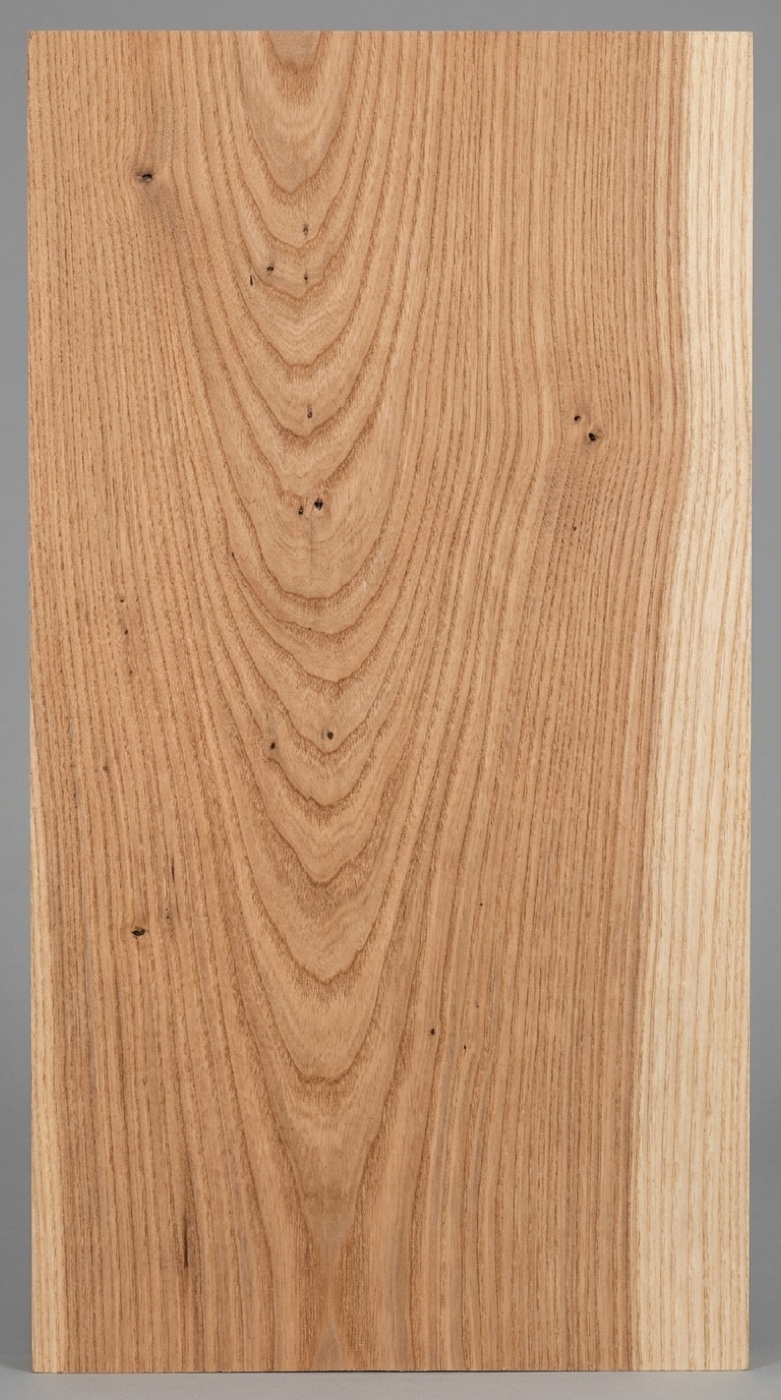
Elm's defining property is that it will not split. Its grain interlocks — fibers alternating direction layer by layer — which makes riving it along the grain nearly impossible and gives the wood exceptional resistance to splitting under stress.
That single trait explains most of elm's historical uses. Wagon wheel hubs, which take spokes driven radially into them from every direction, were elm. Chair seats, which get bored full of holes for legs and spindles and then need to hold together anyway, are traditionally elm in the English tradition. Mallet heads, butcher blocks, and anything else that gets hit repeatedly: elm.
Working it
The interlocked grain that makes elm tough also makes it awkward:
- Tearout is constant on plain-sawn faces under a plane or router, because there is no "with the grain" direction that stays correct for the whole board. Take light passes, skew the cut, or finish with a scraper.
- It's stringy. Elm fuzzes and tears rather than cutting crisply when tooling is dull. Sharp edges matter here more than the density suggests.
- It steam-bends superbly. The same interlocking that resists splitting lets elm take a tight bend without failing — it's among the best bending woods available, alongside ash and oak.
- It has an odor. Freshly cut elm, particularly the wetter species, smells distinctly unpleasant. It dissipates on drying.
Dutch elm disease
American elm was one of the great American street trees, planted in vast numbers along boulevards for its arching vase-shaped canopy. Dutch elm disease — a fungus spread by bark beetles, first identified in the US in 1928 — has killed the overwhelming majority of mature American elms since.
Elm lumber still comes to market, largely from surviving rural and salvaged trees, and disease-resistant cultivars are being planted. But it's no longer a commodity hardwood you can count on your dealer stocking, and prices reflect that. If you find good elm, buy it when you see it.
Finishing
Coarse, open, ring-porous texture — it will not go glass-smooth without grain filler, and looks entirely right with an oil finish that leaves the pore structure visible. It takes stain reasonably evenly.
Typical Uses
Chair seats and Windsor-style stick chairs, furniture, boxes, butcher blocks, mallet heads, veneer, and historically wheel hubs and boat parts.
Images
Raw Wood: A board of American elm -- reddish brown, ring-porous, with the wavy interlocked grain that makes it nearly impossible to split