
Wood Species
American Sycamore
Platanus occidentalis
- Janka hardness
- 770 lbf
- Specific gravity
- 0.49
- Workability
- Interlocked grain tears out and the wood moves a lot while drying; quartersawn stock is far better behaved
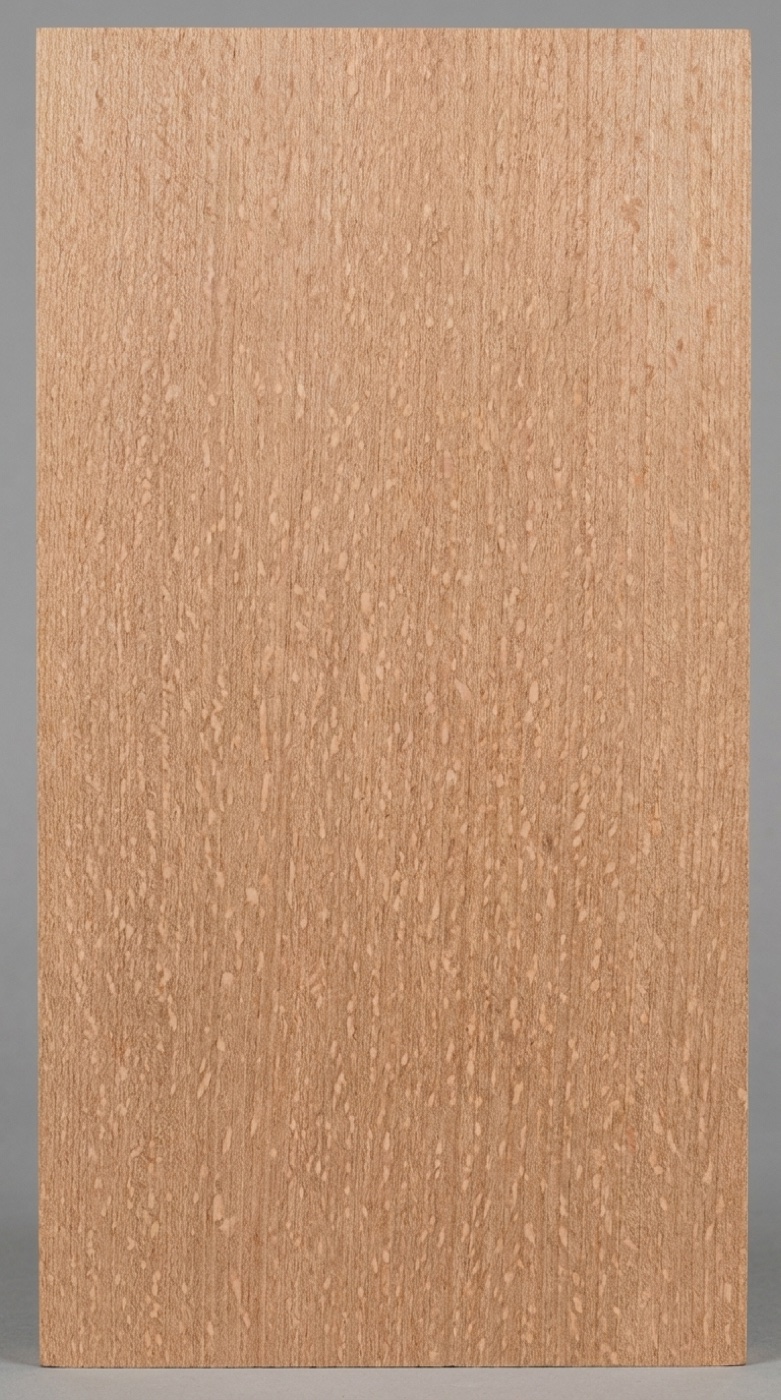
American sycamore is two different woods depending on how the log was cut, and that fact is most of what's worth knowing about it.
Quartersawn is the whole story
Sycamore has unusually large, prominent medullary rays — the sheets of cells running radially out from the center of the trunk. Cut the board plain-sawn and you get a bland, light tan surface with not much going on. Cut it quartersawn, so the saw passes across those rays rather than along them, and their exposed faces cover the board in a dense, even, freckled fleck.
The effect is close to what "lacewood" and "leopardwood" are sold for at three or four times the price, and it's a domestic wood. Quartersawn sycamore has been used for drawer sides, cabinet panels, and — in the UK, where the closely related European species is called plane — for veneer and instrument backs for centuries.
What makes it difficult
Sycamore has a real reputation for being a nuisance, and it's earned:
- It moves. Sycamore has high shrinkage and a strong tendency to warp, cup, and twist as it dries, which is why so much of it ends up as pallets and crates rather than furniture. Buy it properly dried, sticker it, and don't rush the acclimation.
- Interlocked grain. It tears out under a plane or a router, particularly on plain-sawn faces. Sharp tooling, light passes, and a scraper for the final surface.
- It's not durable outdoors. Sycamore rots readily and is a poor exterior wood.
The trade-name confusion
"Sycamore" means different trees in different places. In North America it's Platanus occidentalis. In Britain, sycamore is a maple (Acer pseudoplatanus) — a pale, hard, fine-textured wood used for violin backs — and the tree Americans call sycamore is called plane. If you're reading a British book and the working properties don't match what's on your bench, this is why.
Typical Uses
Drawer sides, cabinet and furniture panels, veneer, butcher blocks and chopping surfaces (it resists splitting), turned objects, boxes, and an enormous quantity of pallets.
Images
Raw Wood: A quartersawn board of American sycamore -- the dense freckled ray fleck that only appears on this cut