

Wood Species
Aromatic Red Cedar (Eastern Red Cedar)
Juniperus virginiana
- Janka hardness
- 900 lbf
- Specific gravity
- 0.47
- Workability
- Machines easily but is brittle and knotty; short, narrow, knot-riddled boards are the norm
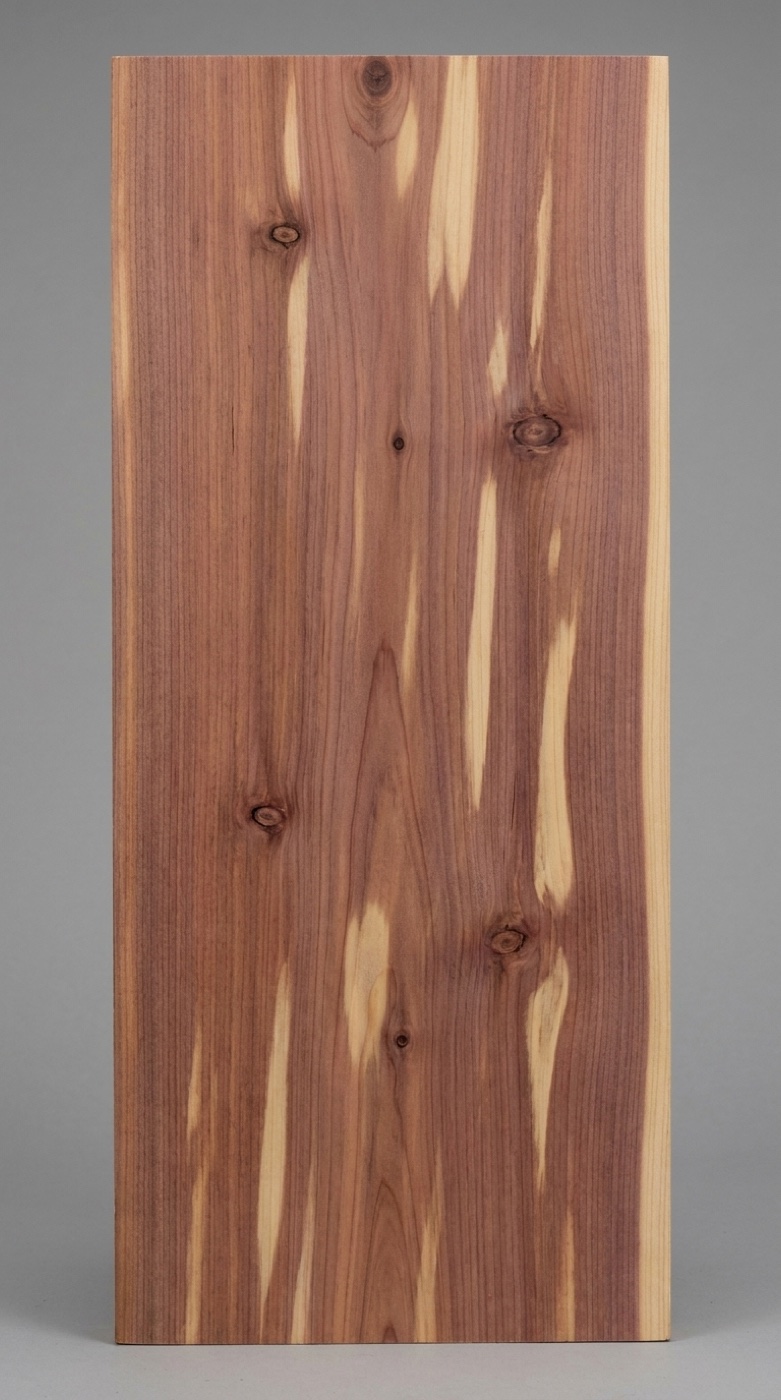
Aromatic red cedar is a juniper, not a cedar, and it's sold almost entirely on its smell. Closet linings, blanket chests, and hope chests are its overwhelming use, and it's stocked at every big-box store as thin tongue-and-groove closet planking for exactly that.
The moth thing, honestly
The claim is that cedar repels moths. The accurate version: the aromatic oils in the heartwood kill small, newly hatched clothes-moth larvae at sufficient concentration in a well-sealed space. They do not kill mature larvae, they do not kill eggs reliably, and they do nothing for an infestation already in progress.
Two practical consequences. First, cedar is a preventive measure for clean garments in a tight enclosure, not a treatment. Second, the aroma fades as the surface oxidizes, typically within a few years — the fix is a light sanding to expose fresh wood, which restores it. Never finish the interior of a cedar chest or closet: a film finish seals the oils in and turns the whole exercise into decoration.
What the boards are actually like
This is a small, slow, twisty tree, and the lumber reflects that:
- Narrow and short. Wide clear boards essentially don't exist. Expect to glue up panels from narrow stock.
- Knotty, with lots of small dark knots, many of them loose or falling out entirely.
- Dramatic color contrast between the reddish-violet heartwood and the near-white sapwood, often streaking through the same board. It's the look people buy it for, and it fades toward a uniform brown with UV exposure.
- Brittle. It splits easily; predrill near edges.
Working it
Easy to machine and it takes detail well, but the knots are hard, blunt tooling, and cause tearout. It turns well. It's rot resistant and was historically the standard American fence post before black locust and treated pine took over — and it's still the standard wood for pencils, chosen because it sharpens without splintering.
The dust is a significant respiratory irritant. Aromatic cedar dust bothers a lot of people and sensitizes some of them; a respirator is genuinely warranted, not just good practice.
Finishing
Outside a chest or closet interior, cedar finishes fine under oil or a clear film, which deepens the reddish tone considerably. Inside one, leave it bare — the whole point is the exposed wood.
Typical Uses
Closet and chest linings, blanket chests, fence posts, outdoor furniture, small turned objects, pencils, and rustic furniture.
Images
Raw Wood: A board of aromatic red cedar -- violet-brown heartwood streaked with pale sapwood and studded with small tight knots