

Wood Species
Bald Cypress
Taxodium distichum
- Janka hardness
- 510 lbf
- Specific gravity
- 0.46
- Workability
- Easy and pleasant, though silica in some stock dulls tooling and it can be brittle around knots
Bald cypress is a deciduous conifer — it drops its needles in winter, which is what "bald" refers to — growing in the swamps and river bottoms of the American Southeast. It fills the same role there that western red cedar and redwood fill on the west coast: the local, naturally durable, untreated exterior softwood.
Old growth vs. what you can buy
This distinction matters more with cypress than almost any other wood.
Old-growth cypress — slow-grown, dense, heartwood-rich, harvested from centuries-old swamp trees — is genuinely and famously rot resistant. It built water tanks, docks, greenhouses, and boats, and the reputation cypress carries today was earned by it.
Second-growth cypress, which is what's actually sold now, is faster grown with a much higher proportion of non-durable sapwood, and it is considerably less decay resistant. It's still a decent exterior wood; it is not the legendary one. Sinker cypress — old-growth logs recovered from riverbeds where they sank during the original logging era — is the real thing, and priced like it.
Pecky cypress
Cypress is subject to a fungus that hollows out irregular, elongated pockets through the heartwood while leaving the surrounding wood sound. In any other species this would be a defect that made the board firewood.
Instead, "pecky" cypress became a decorative material in its own right — used for ceilings, wall paneling, and rustic interiors, sold at a premium for the texture. The fungus dies when the wood is dried, so it doesn't spread. It's one of the more cheerful examples of a defect being reclassified as a feature.
Working it
- Easy to machine and pleasant to work, with straight grain and even texture.
- Silica content in some stock, particularly wood from certain regions, will dull cutting edges faster than the low density suggests.
- Fairly stable with modest shrinkage.
- It has an odor — cypress smells distinctly of the swamp when cut, which some people find pleasant and some don't. It dissipates.
Finishing
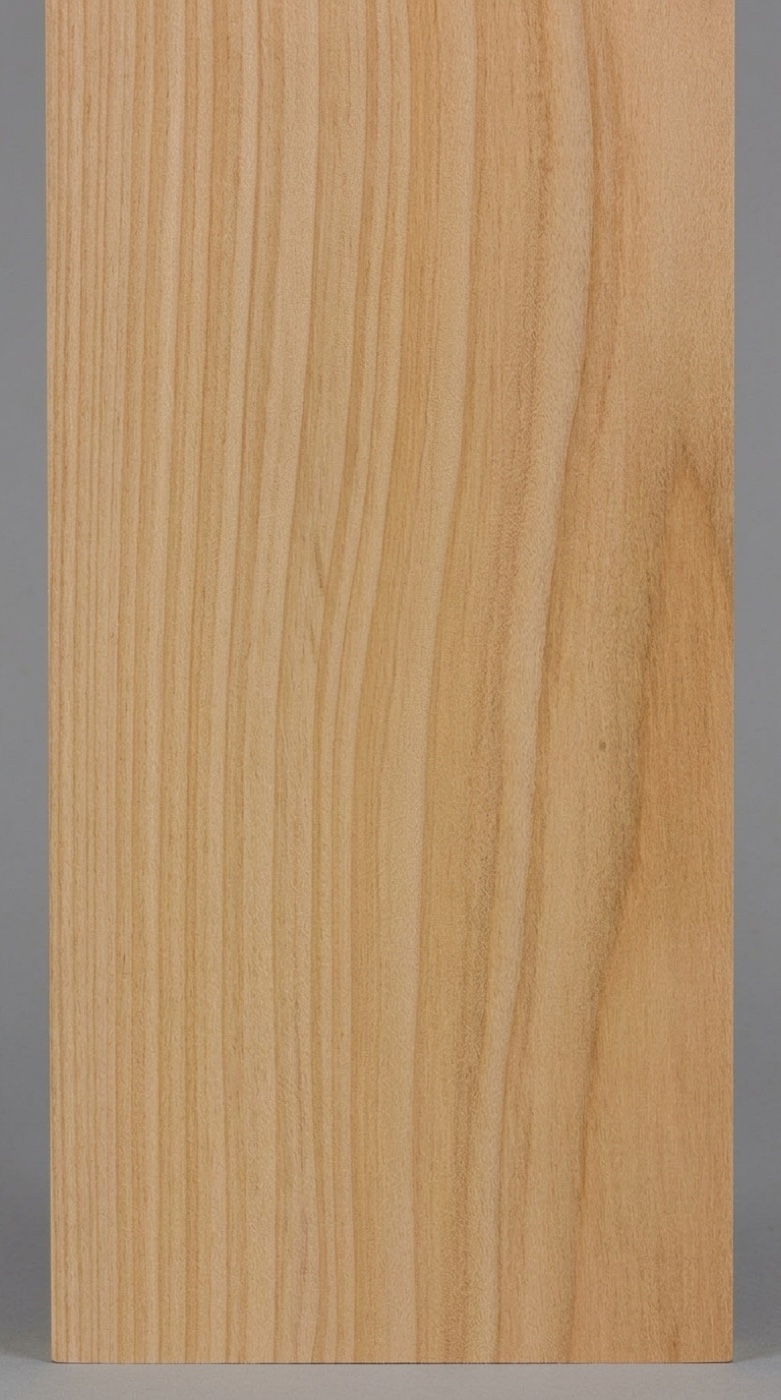
Takes finish well and stains reasonably evenly for a softwood, better than pine. Outdoors it weathers to silver-gray if left bare, or takes an exterior finish on the usual reapplication schedule. Its natural yellowish-tan under a clear finish is understated and looks right on interior paneling.
Typical Uses
Exterior siding, trim, and decking, docks and boat building, greenhouses, outdoor furniture, interior paneling (especially pecky), beams, and shingles.
Images
Raw Wood: A board of bald cypress -- pale yellowish tan with straight grain and even texture