

Wood Species
Black Limba (Korina)
Terminalia superba
- Janka hardness
- 670 lbf
- Specific gravity
- 0.55
- Workability
- Easy and light, but coarse open pores fuzz under dull tooling and want filler before any film finish
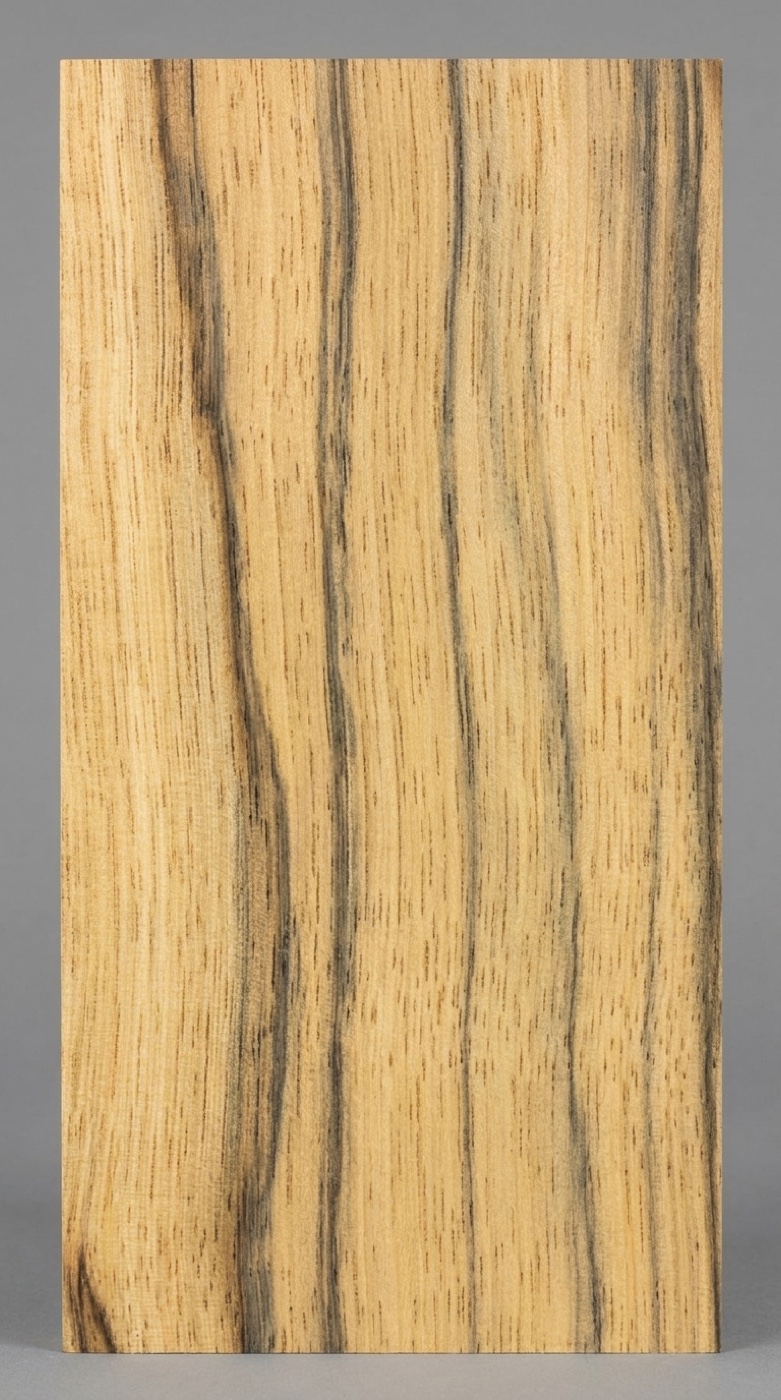
Limba is a West African hardwood sold in two grades that are really the same wood sorted by appearance:
- White limba — the pale, uniform, yellowish-tan sapwood, with no streaking.
- Black limba — boards containing the darker heartwood, where irregular gray-to-black streaks run dramatically through the pale ground.
Black limba is what people mean when they seek it out, and the contrast can be striking — bold, irregular, almost inky lines that look painted on.
Korina
Gibson used limba in the late 1950s for the Flying V and Explorer, marketed it as "korina," and those instruments became so collectible that the trade name stuck permanently in the guitar world. Korina is limba. There is no korina tree.
It remains a popular guitar body wood for real reasons: it's light (comparable to poplar in weight despite being a tropical hardwood), it's stable, it machines easily, and it looks good enough to finish clear rather than paint.
Working it
- Light and soft-ish at 670 lbf, easy to cut, drill, and shape.
- Coarse and very open-pored. This is the main thing to plan around: limba will not go anywhere near glass-smooth without grain filler, and a clear gloss finish over unfilled limba looks pitted. Filler, or embrace the open texture with an oil finish.
- Fuzzes under dull tooling — the soft fibers tear rather than cut. Sharp edges, light final passes, and raise-and-knock-back the grain before finishing.
- Stable once dry, with low movement.
- Not durable outdoors and susceptible to insect attack. Interior only.
- Glues and fastens well.
The dust is a documented irritant and sensitiser — limba is one of the tropical woods with a real occupational-health record for skin and respiratory reactions. Respirator on.
Sourcing
Terminalia superba is fast growing, widely planted, and not CITES-listed or threatened — one of the less complicated tropical hardwoods to buy. It's reasonably available through specialty dealers and guitar-wood suppliers.
Finishing
Grain filler if you want a smooth film. It takes stain and dye reasonably evenly for a wood this open. Many builders leave the black streaking under a simple clear finish, which is the point of buying it. See the Finish Simulator.
Typical Uses
Electric guitar bodies and necks, furniture, veneer, interior joinery, turned objects, and decorative panelling.
Images
Raw Wood: A board of black limba (korina) -- pale gold with the dramatic dark streaking the heartwood grades are bought for