

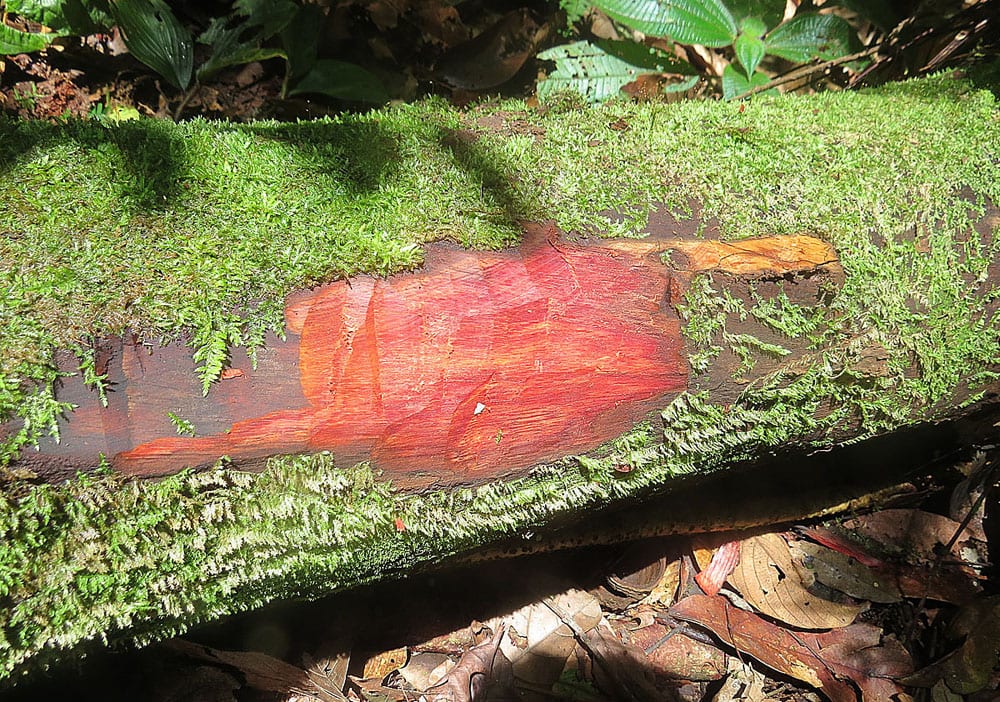
Dick Culbert from Gibsons, B.C., Canada, CC BY 2.0, via Wikimedia Commons
Wood Species
Bloodwood
Brosimum rubescens
- Janka hardness
- 2900 lbf
- Specific gravity
- 1
- Workability
- Difficult — extremely dense, dulls tools, brittle and splinters easily
Bloodwood (Brosimum rubescens) delivers exactly what the name promises — heartwood in a bright, vivid red that mellows toward brownish-red with light exposure over time. Pale yellowish sapwood does exist, but you'll rarely see it in imported lumber; the trees run wide enough in diameter that suppliers just cut around it.
Working Properties
Bloodwood is extremely dense, hard on tools, and brittle enough to splinter if you're not paying attention while machining it. The reward for pushing through all that: a lustrous red surface at the finishing stage that quartersawn pieces sometimes take even further, into genuinely iridescent territory.
Safety
Bloodwood dust has been linked to thirst, salivation, nausea, and skin irritation in some woodworkers — not a species to get casual with dust collection and a respirator on.
Typical Uses
Inlay, trim, carvings, furniture accents, guitars, and knife handles — almost always in small quantities where its color is the point.
Images
Raw Wood: A log in Amacayacu Park of the Colombian Amazon proves to be Bloodwood or Palo de Sangre. This species is found mainly in the Amazon Basi... — Dick Culbert from Gibsons, B.C., Canada, CC BY 2.0, via Wikimedia Commons
Images are sourced from Wikimedia Commons under their original open licenses -- see each image's caption for its specific license and attribution.