

Wood Species
Brazilian Cherry (Jatoba)
Hymenaea courbaril
- Janka hardness
- 2350 lbf
- Specific gravity
- 0.84
- Workability
- Difficult — very hard and dense, but rewarding results; blunts cutters
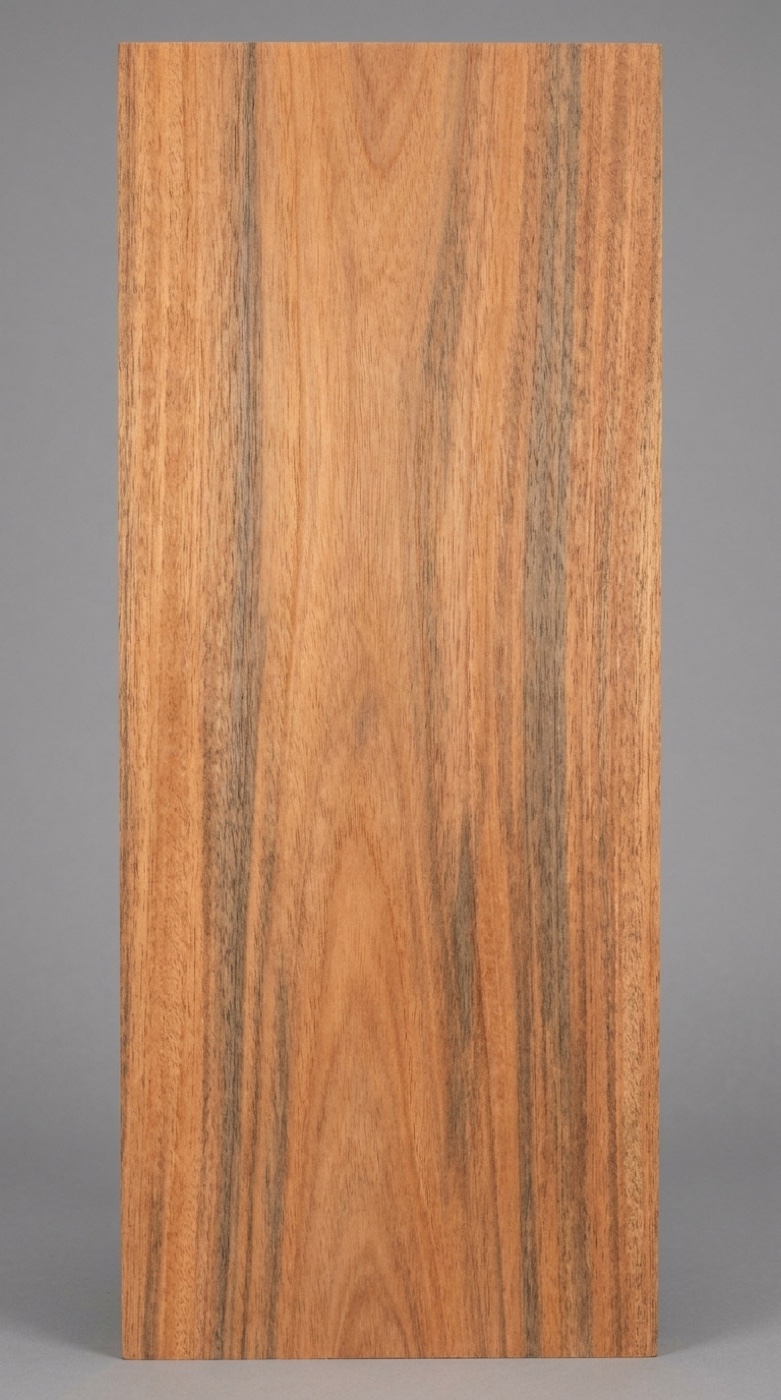
Jatoba, sold in North America almost exclusively as "Brazilian Cherry," has no botanical relation to true cherry (Prunus serotina) whatsoever — the flooring trade name comes purely from its color resembling stained, aged cherry. Its real name is Hymenaea courbaril, a large canopy tree native to Central and South America.
Working Properties
Jatoba is exceptionally stiff, strong, and hard — genuinely good value if you want exotic-hardwood strength without the exotic-hardwood price tag. That strength comes with a toll: it's a real fight to work given the density, cutting edges dull noticeably fast, and pre-drilling before any fastener is non-negotiable.
Typical Uses
Flooring (by far its most common use), furniture, cabinetry, tool handles, and railroad ties.
Images
Raw Wood: A board of Brazilian Cherry (Jatoba) -- orange-brown to reddish brown with darker streaks