

Wood Species
Caribbean Walnut
Lysiloma spp. (incl. L. bahamensis, L. latisiliquum)
- Janka hardness
- 1400 lbf
- Specific gravity
- 0.65
- Workability
- Generally good; not closely related to true walnut despite the name
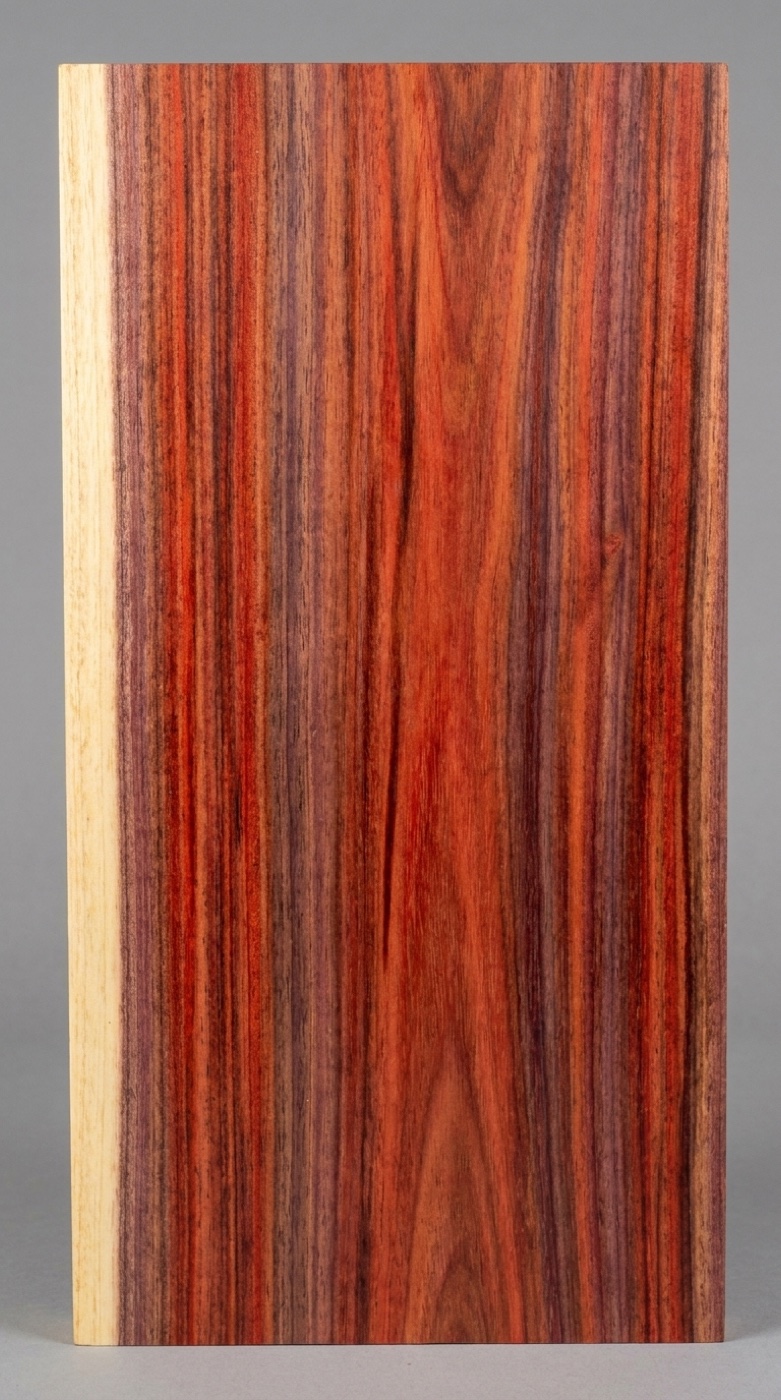
Caribbean walnut — also sold as tzalam, sabicu, or false tamarind — shares essentially nothing with true walnuts in the Juglans genus beyond the name on the price tag. It actually comes from Lysiloma, a legume-family genus native to Central America and the Caribbean.
Working Properties
Caribbean walnut behaves fine under typical hand and machine tools, without the drama some tropical hardwoods bring to the bench. The trade treats it as exactly what it's for: a lower-cost stand-in for American black walnut, wherever a similar tone is wanted without the price.
Typical Uses
Flooring, furniture, veneer, tabletops, trim, and woodturning.
Specific gravity is an estimate for this species — a precisely sourced figure was not available for this article.
Images
Raw Wood: A board of Caribbean Walnut (Macacauba) -- reddish to purplish brown with darker stripes