

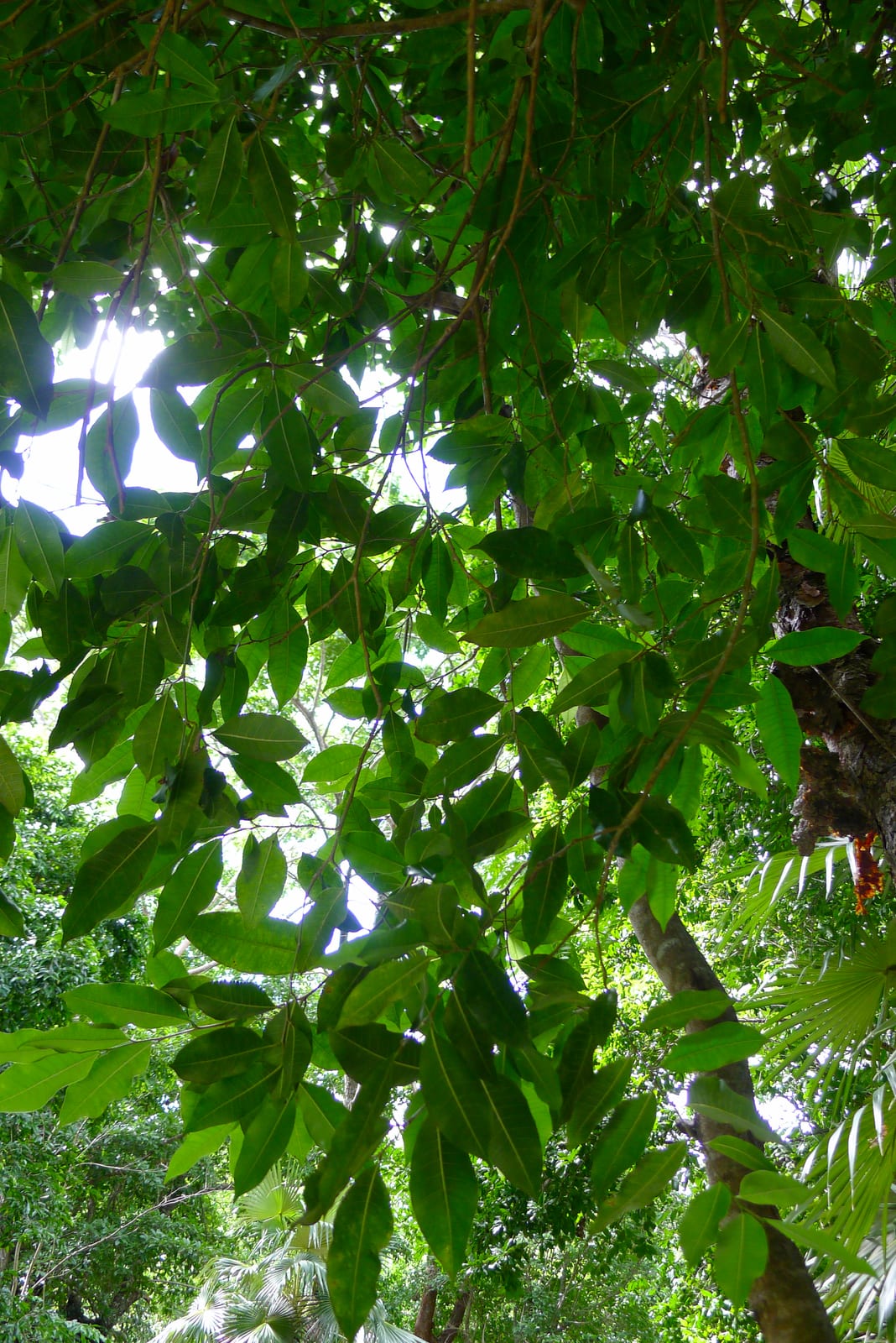
William Avery Hudson, CC BY-SA 4.0, via Wikimedia Commons
Wood Species
Chechen (Caribbean Rosewood)
Metopium brownei
- Janka hardness
- 2400 lbf
- Specific gravity
- 0.83
- Workability
- Machines fairly easily; interlocked grain risks tearout; pre-bore for fasteners
Chechen, marketed in North America as "Caribbean Rosewood," is not a true rosewood (genus Dalbergia) in any sense — it's Metopium brownei, a Central American tree also, tellingly, called black poisonwood. Heartwood color runs wildly: red, orange, brown, all contrasted against darker blackish-brown stripes that deepen further with time.
Working Properties
Chechen machines fairly easily, though interlocked grain can catch you out with tearout. Pre-boring before any fastener is worth the extra step, since it's prone to splitting. Glues and finishes well once you're past that.
Safety
Read this one twice: the living tree's sap causes severe skin reactions similar to poison ivy — it's a close relative of both poison ivy and poison sumac, and that's not a coincidence the name is hinting at. The dried, finished wood itself is safe to handle, but the dust has still been reported as a sensitizer, so dust collection and skin/eye protection aren't optional here.
Typical Uses
Furniture, cabinetry, flooring, and turned objects, often marketed as a more affordable alternative to premium tropical hardwoods.
Images
Tree: Yaax Che Jardin Botanico `Dr. Alfredo Barrera Marin`, Puerto Morelos, Mexico — William Avery Hudson, CC BY-SA 4.0, via Wikimedia Commons
Images are sourced from Wikimedia Commons under their original open licenses -- see each image's caption for its specific license and attribution.