

Wood Species
Cocobolo
Dalbergia retusa
- Janka hardness
- 2960 lbf
- Specific gravity
- 1.1
- Workability
- Turns and polishes like nothing else; fights glue, fights finish, and sensitises a lot of the people who work it
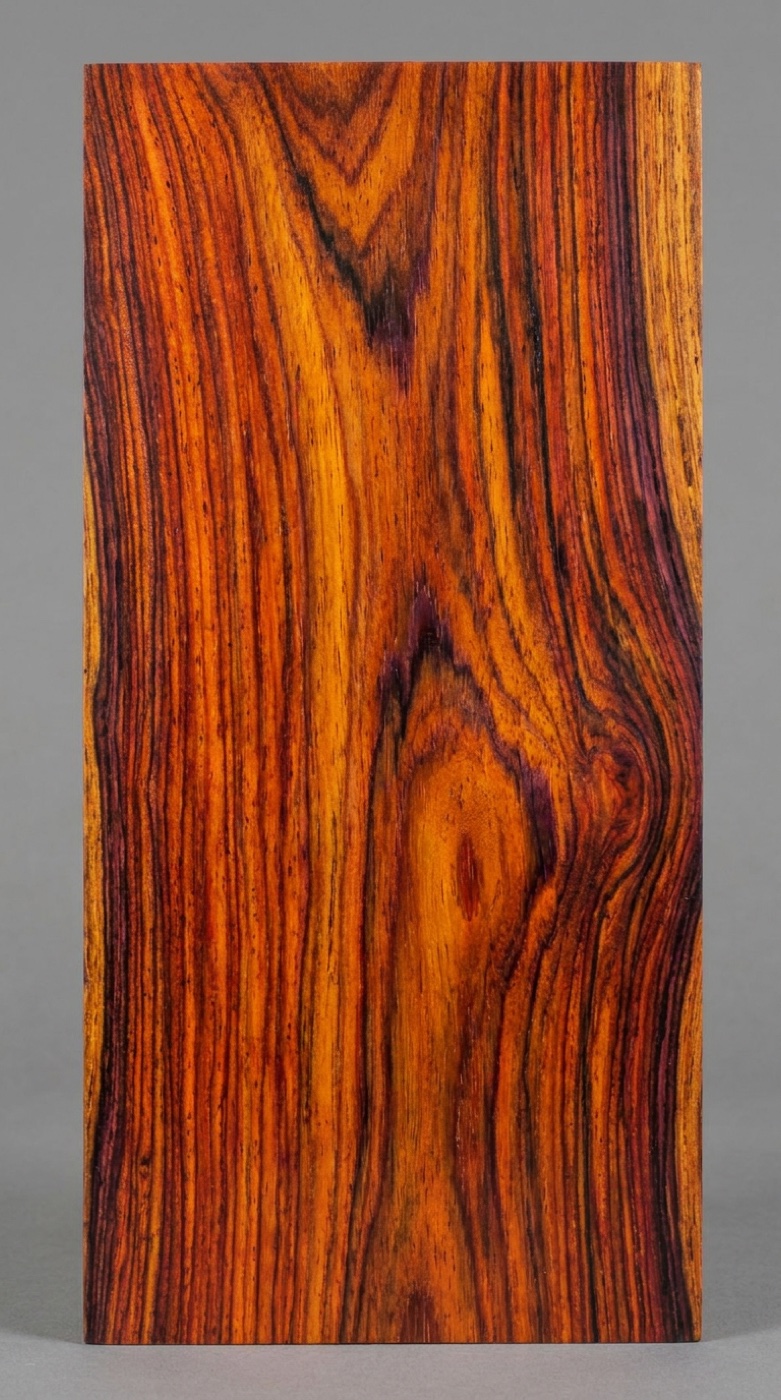
Cocobolo is a true Dalbergia rosewood from Central America, and it is spectacular: oranges, reds and yellows shot through with irregular black and purple streaking, wildly variable board to board, with a fine oily texture that polishes to a glass-like shine straight off the tool. Turners, knife makers, and instrument builders pay real money for it and consider it worth every cent.
It's also denser than water — it sinks — and one of the more genuinely hazardous woods to work.
The health warning, in detail
Cocobolo is among the most potent sensitisers in woodworking. Not "some people find it irritating" — it produces contact dermatitis, eye and respiratory irritation, and asthma-like reactions in a substantial fraction of people, and repeated exposure creates permanent allergic sensitisation.
The pattern is well documented and worth understanding: many woodworkers work cocobolo happily for years, then develop a reaction that thereafter appears on any exposure, sometimes to other Dalbergia species too. Sensitisation is cumulative and it does not reverse.
Practical minimum: a real respirator (not a dust mask), gloves, dust collection at the tool, and long sleeves. Don't sand it dry in an unventilated space. This is one of the few woods where the safety advice isn't boilerplate.
Working it
- Extremely dense and hard at 2,960 lbf. Carbide, sharp, patient feeds.
- Very oily. This is the source of both its beauty and its problems.
- Glue fails on it unless you prepare properly: wipe joint faces with acetone immediately before glue-up, glue fresh off the machine, and consider epoxy over PVA for anything structural. A lot of failed cocobolo knife scales trace back to skipping this.
- Turns superbly and takes a polish with no finish at all — many turners just buff it.
- It can interfere with the cure of oil and water-based finishes. Seal with dewaxed shellac first if you're filming over it — see the Finish Simulator.
Sourcing
All Dalbergia species have been on CITES Appendix II since 2017. Domestic purchase from a US dealer is straightforward; international shipment requires permits. Cocobolo is also IUCN-listed and has been heavily harvested, so buying from a supplier who can say where it came from is not an unreasonable ask.
Expect to buy it as turning blanks, knife scales, pen blanks, and small boards rather than as lumber. Wide boards barely exist and are priced like jewellery.
Typical Uses
Knife and gun handles, turned objects, musical instruments, pool cues, pens, jewellery boxes, small furniture accents, and inlay.
Images
Raw Wood: A board of cocobolo -- oranges and reds shot through with black streaking, and the oily luster it polishes to unaided