

Wood Species
East Indian Rosewood
Dalbergia latifolia
- Janka hardness
- 2440 lbf
- Specific gravity
- 0.83
- Workability
- Dense and hard on tooling; interlocked grain tears out and the natural oils fight glue and finish alike
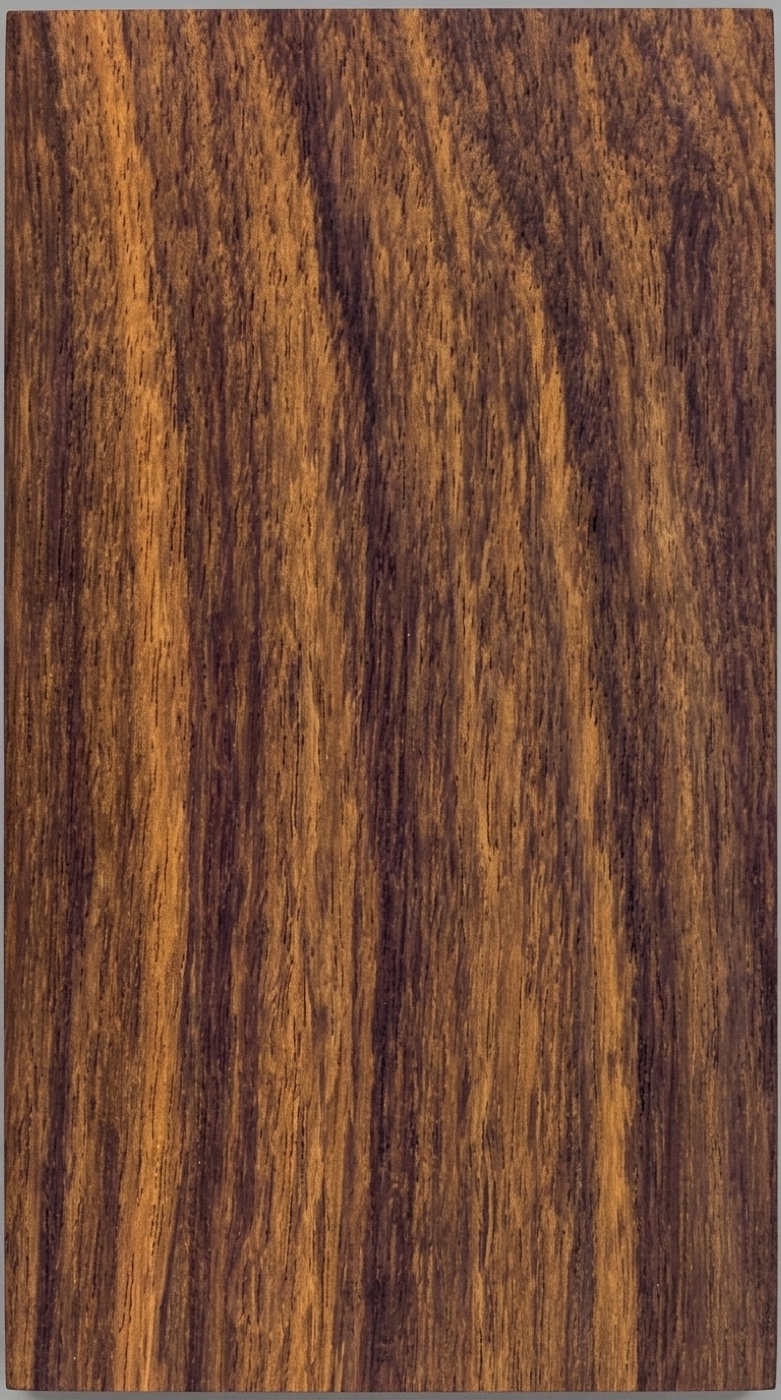
East Indian rosewood is a genuine Dalbergia — the actual rosewood genus, unlike the many woods sold as "rosewood" that aren't — and it is the practical answer to wanting rosewood in the 21st century.
Why it replaced Brazilian rosewood
Brazilian rosewood (D. nigra) was the reference wood for guitar backs and sides, fine furniture, and veneer until it was placed on CITES Appendix I in 1992 — the most restrictive category, effectively ending commercial international trade. Anything built from it since is either pre-ban stock with documentation or not legal to cross a border with.
East Indian rosewood stepped straight into the gap. It's widely plantation-grown in southern India, has similar density and tonal properties, and while it lacks D. nigra's dramatic streaking, it's a genuinely excellent wood on its own terms — deep purplish brown with darker streaking, fine even texture, and beautiful chatoyance under finish.
Note the CITES status carefully: as of 2017 all Dalbergia species are listed on CITES Appendix II (with a 2019 exemption for finished musical instruments weighing under 10kg of rosewood). Buying domestically is straightforward; crossing borders with it is a paperwork exercise. If you're building instruments for export, get the documentation right.
Working it
Everything about rosewood is a consequence of it being dense and oily:
- It blunts tooling fast. Carbide, sharp, patient.
- Interlocked grain tears out. Light passes, high cutting angles, scrapers for the final surface.
- The natural oils interfere with glue. Wipe joint surfaces with acetone or denatured alcohol immediately before glue-up, and glue reasonably fresh off the machine rather than days later.
- The oils also fight water-based finishes, which can stay tacky or fail to bond. A dewaxed shellac barrier coat solves it — see the Finish Simulator.
- It turns and polishes superbly, taking a high natural luster with almost no finish at all.
A health note, seriously
Dalbergia species are among the more significant sensitizers in woodworking. Rosewood dust causes skin, eye, and respiratory irritation, and repeated exposure can produce genuine allergic sensitization that doesn't go away — people who've worked it for years sometimes have to stop entirely. Wear a respirator and keep the dust collected. This isn't overcaution; it's the documented pattern with this genus.
Typical Uses
Guitar backs, sides and fingerboards, fine furniture and veneer, turned objects, carving, boxes, knife and tool handles, and marimba and xylophone bars.
Images
Raw Wood: A board of East Indian rosewood -- purplish brown with darker streaking and the fine, tight texture of a true Dalbergia