

Wood Species
Eastern White Pine
Pinus strobus
- Janka hardness
- 380 lbf
- Specific gravity
- 0.35
- Workability
- Exceptionally easy -- cuts, carves, and planes with almost no resistance, but dents if you look at it wrong
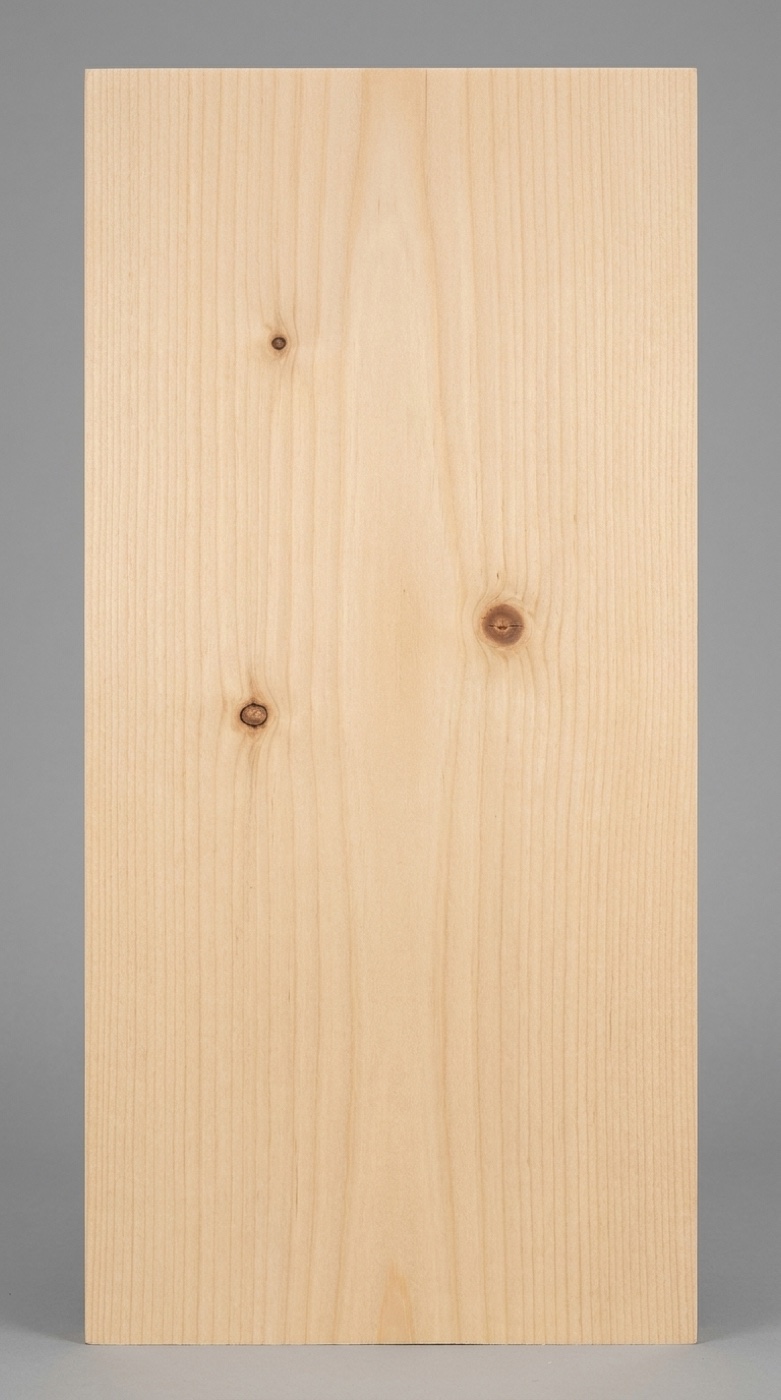
Eastern white pine (Pinus strobus) is the pale, lightweight, resolutely soft softwood sold at every home center in North America as "white pine," "select pine," or — in the boards nobody sorts through carefully — "common board." It is almost certainly the first wood you ever cut, and it deserves more credit than it usually gets from people who have since graduated to walnut.
What you're actually buying
The board stock at a big-box store comes in two broad grades, and the price gap between them is entirely about knots:
- Select / D-grade — clear or nearly clear, few knots, straight grain, sold as 1x material in the nicer rack. Costs real money per board foot, sometimes more than poplar or soft maple, which surprises people.
- Common (#2 and better) — the cheap stack. Knots, some of them loose, plus the occasional twist, cup, or bow that developed after the kiln. Fine for shop furniture, jigs, and anything painted.
Both are the same species. You're paying for defect sorting, not for better wood.
Working Properties
White pine is about as easy to work as wood gets. It cuts with hand tools nearly effortlessly, carves beautifully, planes to a genuinely glassy surface with a sharp iron, and holds crisp detail in mouldings. Traditional carvers and pattern makers have used it for centuries for exactly these reasons, and that reputation is earned.
The tradeoffs are equally real:
- It dents. At 380 lbf on the Janka scale it's among the softest commercially available lumber in North America. A dropped chisel leaves a mark. A tabletop in white pine will look lived-in within a year, which is either charming or infuriating depending on your temperament.
- Knots move. Knots are harder and denser than the surrounding wood, so they blunt edges faster, tear out under a router bit, and can loosen and fall out entirely as the board dries further. Sight down every board and check the knots before you buy.
- Resin bleeds. Pitch pockets around knots can weep resin through a finish for years. Seal knots with dewaxed shellac before painting or they will telegraph through.
Finishing
Pine is notoriously blotch-prone. Its density swings sharply between soft earlywood and hard latewood, so pigment stain soaks unevenly into a single board and comes out looking like a bad camouflage pattern. This is the single most common reason a beginner's first stained pine project looks worse than the raw board did.
The fixes, in rough order of how well they work: don't stain it at all (it ambers into a very pleasant honey color on its own under a clear finish); seal first with a dewaxed shellac washcoat or a pre-stain wood conditioner; or use a gel stain, which sits on the surface rather than penetrating. The Finish Simulator walks through the prep for whichever route you pick.
Typical Uses
Shop furniture, painted built-ins, mouldings and trim, carving, pattern making, boxes, and roughly every practice project ever built.
Images
Raw Wood: A board of Eastern White Pine -- pale creamy straw color, fine straight grain with soft low-contrast growth rings and the small tight knots typical of select-grade stock