

Wood Species
Gaboon Ebony
Diospyros crassiflora
- Janka hardness
- 3080 lbf
- Specific gravity
- 1.05
- Workability
- Extremely hard and brittle; blunts everything, chips at edges, and cracks if it dries unevenly
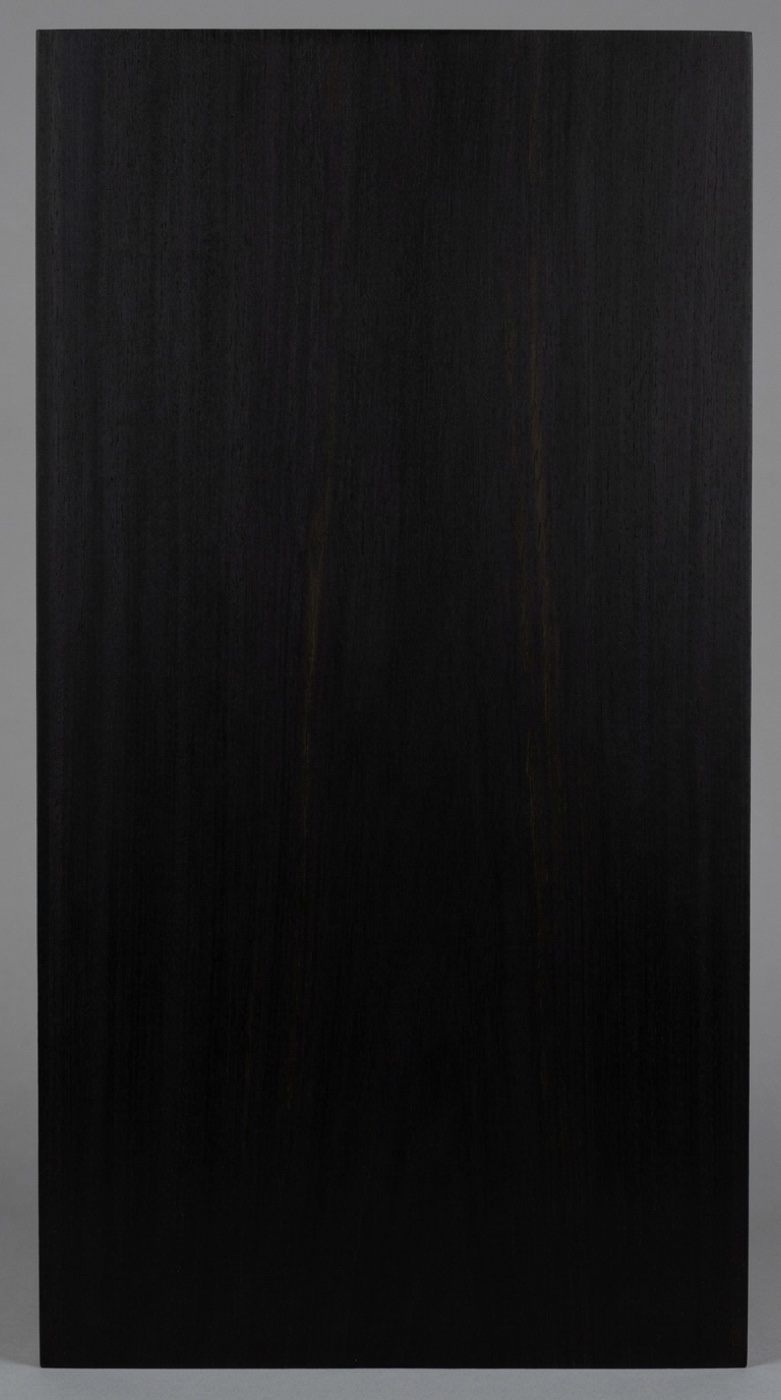
Gaboon ebony is the wood people mean when they say ebony without qualification: a uniform, deep, near-perfect jet black with almost no visible grain, so even in colour that a finished piece can be mistaken for painted or plastic. It is denser than water and sinks.
It's also the reason so many other dark woods get sold as "ebony" — Brazilian ebony, Macassar, katalox, and several others borrow the name for woods that are dark but not this.
Sourcing: the part that actually matters
Diospyros crassiflora is listed by the IUCN as endangered. West and Central African ebony populations have been heavily overharvested for centuries, the trees grow extremely slowly, and only a fraction of a felled tree yields the uniformly black heartwood the market wants — historically, streaked logs were simply left in the forest.
The CITES picture is often misstated, so precisely: all Madagascan Diospyros species are on CITES Appendix II (listed 2013). Gaboon ebony, from West/Central Africa, is not currently CITES-listed. That means the paperwork will not tell you whether your purchase was responsibly sourced.
What can: buying from suppliers with documented, traceable, ideally FSC-certified chains — Taylor Guitars' Crelicam mill in Cameroon is the best-known example of a serious attempt at this, including using the streaked wood the trade traditionally discarded. Buying reclaimed ebony from old pianos and furniture is another genuine option.
Given the price, the scarcity, and the fact that most uses are small accents, this is a reasonable wood to buy carefully and use sparingly rather than avoid entirely.
Working it
At 3,080 lbf it is among the hardest woods in commerce, and it behaves accordingly:
- It blunts everything. Carbide, sharp, slow.
- It's brittle. Chips at edges and corners, splits under fasteners without generous pilot holes.
- It checks and cracks readily with humidity change, particularly in larger pieces. Seal end grain, acclimate slowly, and keep finished work stable.
- It turns and polishes exceptionally, taking a mirror finish straight off the tool with no finish at all — the traditional treatment.
- The dust is a sensitiser and a known irritant. Respirator on.
Buying it
Sold by the small billet, blank, or fingerboard blank, priced by the piece rather than the board foot in most cases. Wide boards effectively don't exist.
Typical Uses
Musical instruments — fingerboards, bridges, tuning pegs, piano keys, clarinet and oboe bodies — inlay, knife and tool handles, turned objects, chess pieces, and small carvings.
Images
Raw Wood: A board of Gaboon ebony -- near-uniform jet black with almost no visible grain