

Wood Species
Lignum Vitae
Guaiacum officinale
- Janka hardness
- 4500 lbf
- Specific gravity
- 1.23
- Workability
- Barely workable by normal standards -- so dense and waxy it clogs abrasives, resists glue entirely, and blunts everything
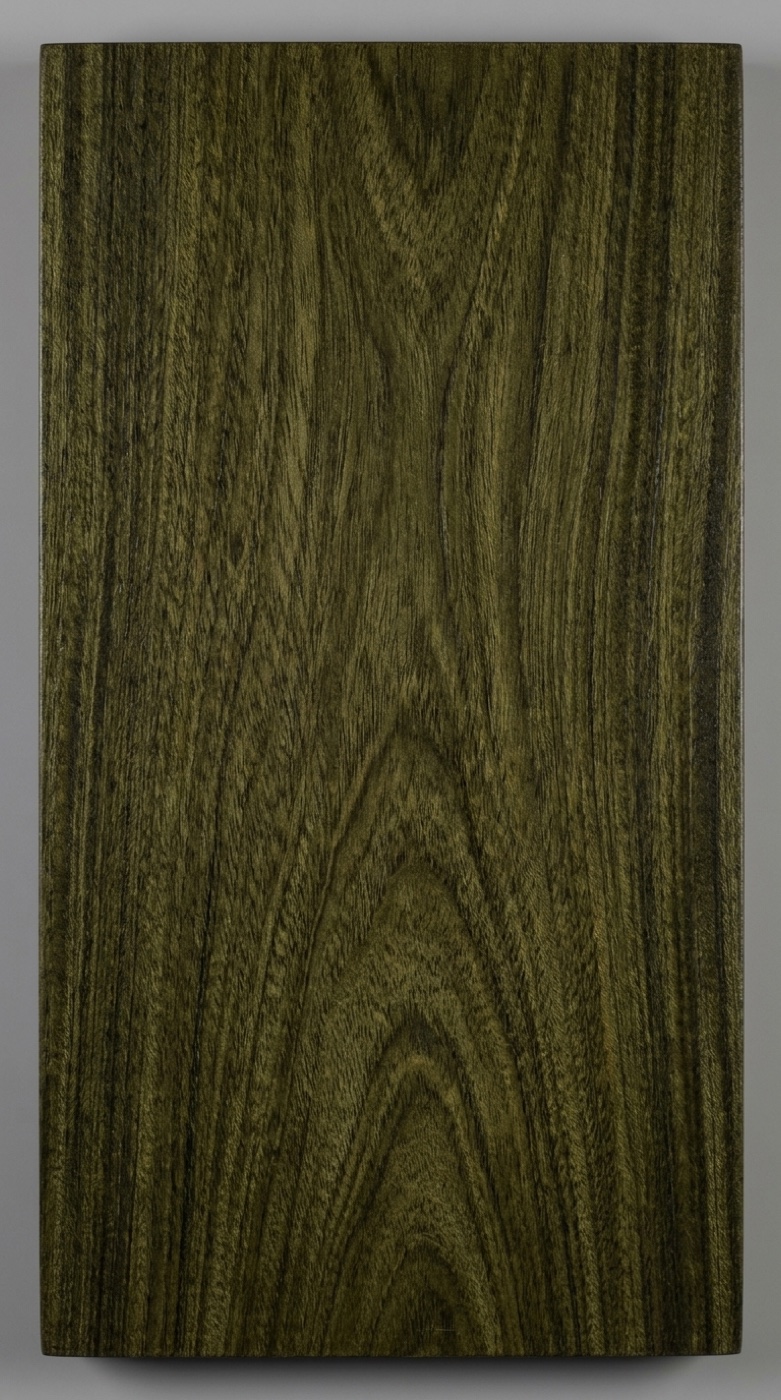
Lignum vitae is the hardest and densest wood ever traded commercially: 4,500 lbf on the Janka scale, about three and a half times red oak, with a specific gravity of 1.23 — it sinks like a stone. The name means "wood of life," from the medicinal claims made for its resin in the 16th century, none of which held up.
The bearing wood
Lignum vitae's genuinely remarkable property isn't hardness — it's that it contains up to 25% natural resin by weight, making it self-lubricating. Combined with extreme hardness and dimensional stability, that made it the material for bearings under conditions where nothing else worked.
The most cited example is real: lignum vitae was used for the stern tube bearings supporting propeller shafts in ships, including the shaft bearings in the first nuclear submarines, because it runs in seawater without additional lubrication and doesn't corrode. It was also standard for pulley sheaves, mallet heads, deadeyes, and the bushings in early hydroelectric turbines.
Its other famous use is British lawn bowls, which were turned from it for centuries.
Why you probably can't buy it
Guaiacum officinale and G. sanctum are on CITES Appendix II, and both are IUCN-listed — G. officinale as endangered. The trees are tiny and grow extraordinarily slowly. Commercial supply of true lignum vitae has effectively ended.
What's sold today under the name is usually Argentine lignum vitae (Bulnesia sarmientoi), a related species that's genuinely similar — very dense, oily, greenish-brown — and also CITES Appendix II listed as of 2010. Verawood is another name for the same thing. It's a legitimate substitute rather than a fraud, but know which you're buying.
Realistically, this is a wood you encounter as small blanks at high prices, or reclaimed from old bearings, bowls, and marine hardware.
Working it
Everything about it is extreme:
- It blunts tooling immediately. Carbide, and expect to resharpen.
- Glue does not stick to it. The resin content defeats normal adhesives outright. Mechanical fastening or epoxy after a thorough solvent wipe, and even then be skeptical.
- It clogs abrasives with waxy resin almost instantly.
- It turns superbly and burnishes to a natural gloss with no finish at all — the traditional treatment, and the sensible one given that most finishes won't cure on it either.
- The colour deepens dramatically with exposure, from olive-green to a dark greenish brown to nearly black.
Typical Uses
Bearings and bushings, mallet heads, pulley sheaves, lawn bowls, turned objects, tool handles, pens, and small carvings.
Images
Raw Wood: A board of lignum vitae -- dark olive-green, oily, and the densest wood ever traded commercially