Wood Species
Osage Orange
Maclura pomifera
- Janka hardness
- 2620 lbf
- Specific gravity
- 0.86
- Workability
- Extremely dense and hard on tooling, but machines and turns beautifully once you accept the pace
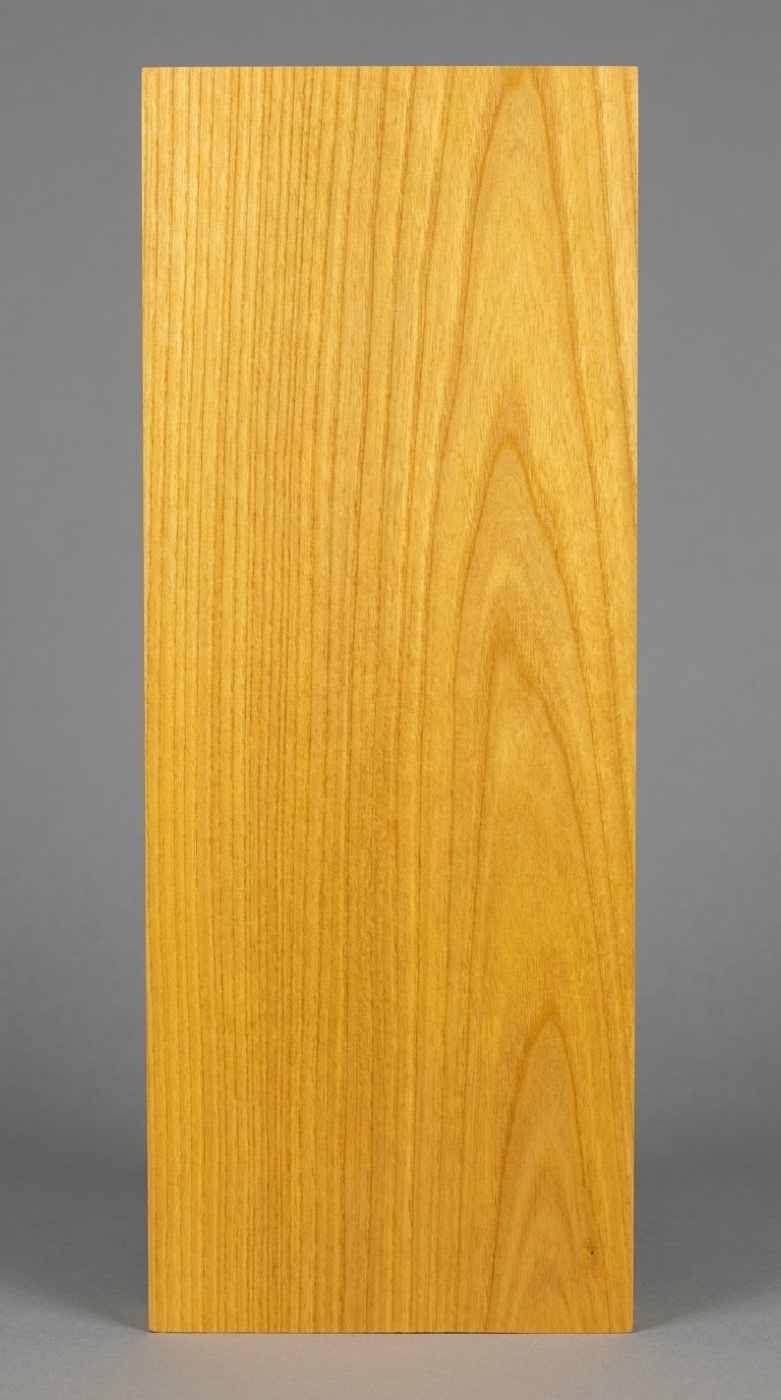
Osage orange comes out of the log a startling, almost fluorescent golden yellow. It is also among the hardest and densest woods native to North America — 2,620 lbf Janka, harder than hickory, harder than most tropical imports, and about twice red oak.
It got planted across the American Midwest by the million in the 19th century as living fencerow, before barbed wire, because its thorny hedges were "horse high, bull strong, and hog tight." Most of the Osage orange in circulation today comes out of those old hedgerows.
The color does not last
This is the thing to know before you build with it. That brilliant yellow oxidizes under UV to a medium golden brown, and eventually to something close to russet. It's not a slow drift — noticeable change happens in weeks of sunlight exposure.
You can slow it with a UV-inhibiting finish and keeping the piece out of direct sun, but you cannot stop it. Build assuming the aged brown is the real color and the yellow is a bonus you get for the first year, and you won't be disappointed. Photograph it early.
Working it
- Hard on edges. It dulls tooling fast. Carbide, sharp, and patient feed rates.
- Turns superbly. Dense, tight-textured, takes a polish straight off the tool. It's a favorite of turners for exactly this.
- Stable once dry, with very low shrinkage — one of the reasons it makes such good bow staves and tool handles.
- Extremely rot resistant. Osage orange fence posts have been documented standing in the ground for decades. It's rated one of the most durable domestic woods there is.
Bows
Osage orange is the traditional and, by most accounts, the best self-bow wood in North America — it stores and returns energy exceptionally well, resists the compression set that ruins other woods, and takes the strain of repeated draws without failing. The Osage Nation's reputation for bows is where the name comes from.
Buying it
It's rarely sold as ordinary lumber. Expect short, twisted, knotty stock from hedgerow trees rather than clear wide boards, sold by the turning blank or the bow stave, often from small specialty suppliers. Long straight clear pieces command real money.
Typical Uses
Bows, turned objects, tool handles, fence posts, musical instruments, small furniture accents, and a natural yellow dye extracted from the heartwood.
Images
Raw Wood: A board of Osage orange -- the vivid fresh-cut yellow that will oxidize to russet brown within a year