

Wood Species
Red Alder
Alnus rubra
- Janka hardness
- 590 lbf
- Specific gravity
- 0.45
- Workability
- Excellent -- soft, even, and predictable; the closest a hardwood gets to effortless
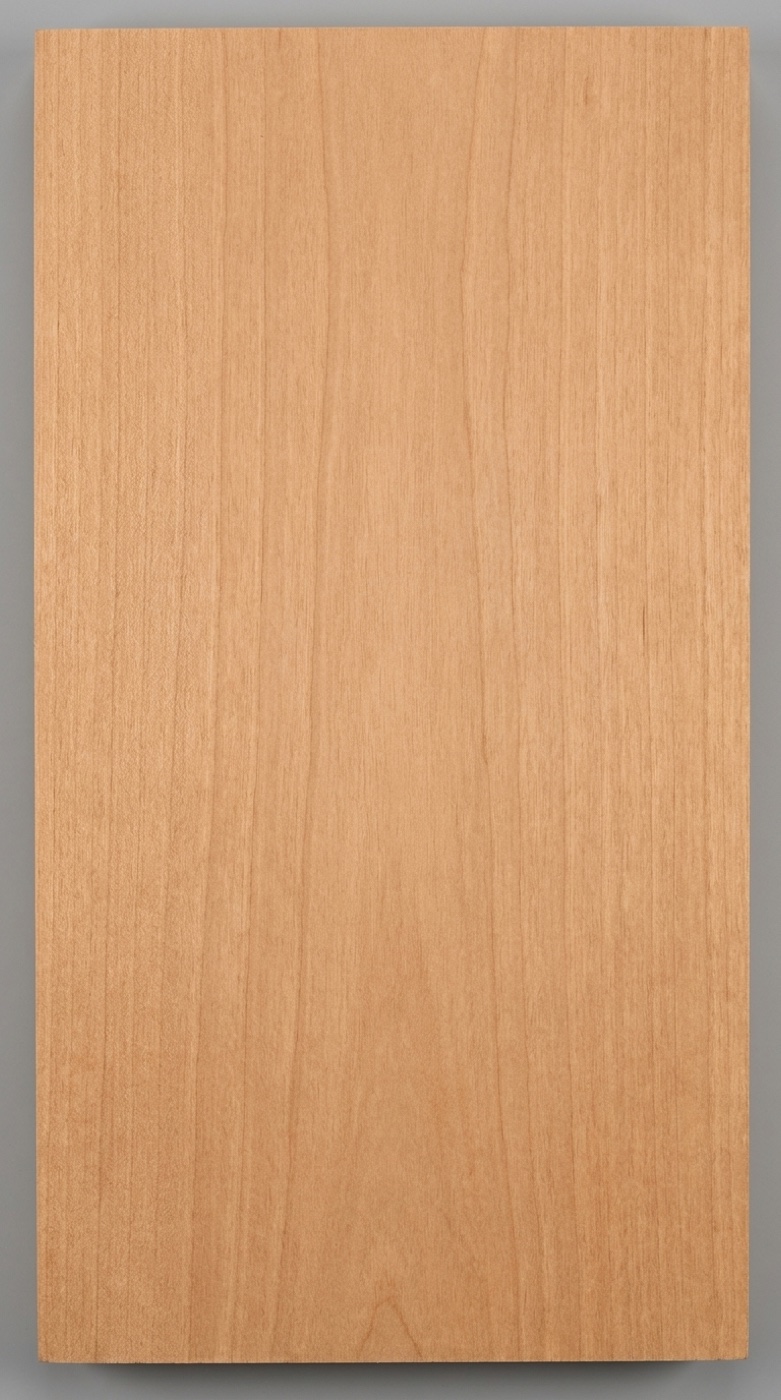
Red alder is the workhorse hardwood of the Pacific Northwest, where it grows fast, cuts easily, and fills the role poplar fills in the east — with one important difference. Alder is worth finishing clear.
Why cabinet shops like it
Alder is unusually uniform. There's essentially no visible distinction between heartwood and sapwood, the grain is straight and fine, the texture is even, and the color sits at a pleasant light tan-to-reddish brown across the whole board. It has no strong figure and makes no demands.
That evenness is exactly the point. Alder machines cleanly, sands easily, glues without drama, and — crucially — takes stain far more evenly than maple or pine do. It's the standard "stain it to look like something else" wood: alder stained to imitate cherry is behind a large share of the stained-cabinet kitchens in North America, and it does the job convincingly because its natural color is already in the same family.
It's also the standard Fender guitar body wood, chosen originally because it was cheap, light, and easy to machine, and kept because the resulting instruments sounded right.
Knotty alder is a different product
Sold alongside clear alder is knotty alder, deliberately graded to include large, dark, sometimes open knots. It costs less, it's used heavily in rustic cabinetry and doors, and it is a genuinely different look — not a defect grade being passed off. Decide which one you want before you order, because they don't mix well in a single project.
The tradeoff
At 590 lbf, alder is soft. It dents, it dings, and it is not the wood for a tabletop that takes real use, a workbench, or stair treads. It's also only moderately strong, so it's a poor choice for structural components or long unsupported shelves.
Finishing
Alder's one quirk is that it can blotch under a heavy pigment stain — less than pine or maple, but enough to matter on a large flat panel. A light washcoat of dewaxed shellac or a wood conditioner beforehand evens it out. Under a clear finish it ambers into a warm, honeyed tone that looks considerably more expensive than it is.
Typical Uses
Kitchen and bath cabinetry, interior doors, furniture, millwork, turned parts, electric guitar bodies, and — because it burns clean and sweet — the smoking of a great deal of salmon.
Images
Raw Wood: A board of red alder -- uniform light reddish tan with almost no distinction between heartwood and sapwood