

Wood Species
Red Meranti
Shorea spp.
- Janka hardness
- 800 lbf
- Specific gravity
- 0.55
- Workability
- Machines easily, but interlocked grain tears out on quartersawn faces and the surface fuzzes without genuinely sharp tooling
Red meranti is a trade name, not a species. It covers dozens of Shorea species from Southeast Asia — Malaysia, Indonesia, the Philippines — grouped and sold by color and density rather than by botany. You'll also see it labeled lauan, seraya, or, most misleadingly, "Philippine mahogany."
It is not mahogany. Real mahogany is Swietenia, in the family Meliaceae; meranti is Dipterocarpaceae, a completely different family that happens to produce reddish-brown wood at a lower price. The name is a century-old marketing decision that stuck, and it has cost a lot of people a lot of money in confusion.
Light red vs. dark red
The trade splits it roughly in two, and it matters:
- Light red meranti — pale pinkish to light reddish brown, lower density (around 620 lbf Janka), softer and more prone to fuzzing. Most of the cheap lauan underlayment and hollow-core door skin material.
- Dark red meranti — deeper reddish brown, noticeably denser and more durable (around 800 lbf), the grade actually worth using for joinery, exterior trim, and boatbuilding.
Both get sold as "meranti" or "lauan" with no distinction on the tag. Judge by weight and color in the rack, not by the label.
Working Properties
Meranti is genuinely pleasant to work with — it cuts and machines with little effort, glues well, and is dimensionally stable once dry, which is why it's a boatbuilding and exterior-joinery staple. Two things to plan around:
- Interlocked grain. The grain reverses direction in alternating bands, so a quartersawn face will tear out no matter which way you plane it. Take fine passes, skew the plane, or reach for a card scraper. A sharp helical-head planer earns its money here.
- It fuzzes. The coarse, open texture leaves a woolly surface if your tooling is anything less than sharp, and that fuzz shows up immediately under finish. Sand to the grit you actually need rather than stopping early, and expect to knock down raised fibers after the first coat.
Silica content in some Shorea species also dulls cutters faster than the density alone would suggest.
Finishing
Large open pores, so it will not go glass-smooth without grain filler — that's a choice, not a defect, and a satin oil finish that leaves the pore texture visible looks entirely correct on it. It takes stain more evenly than pine does. The Finish Simulator has the prep details per finish type.
The durability claim, honestly
Meranti gets marketed as a rot-resistant exterior wood. Dark red meranti has moderate durability — respectable, not ipe, and light red meranti is rated non-durable outright. Exterior meranti wants a real finish schedule and maintenance, not a coat of oil and optimism.
Sourcing
This is the part that deserves your attention more than the working properties do. Many Shorea species are listed by the IUCN as vulnerable, endangered, or critically endangered, and Southeast Asian dipterocarp forests have been logged hard, often illegally. Meranti is not currently CITES-restricted, which means the paperwork won't stop you buying badly-sourced stock — the only real signal available to a buyer is FSC certification and a supplier who can actually tell you where it came from. If you're choosing between meranti and sapele or another certified alternative at a similar price, that's a genuine reason to pick the other one.
Typical Uses
Plywood core and face veneer, hollow-core door skins, underlayment, exterior trim and joinery, boat hulls and interiors, mouldings, and furniture built to a price.
Images
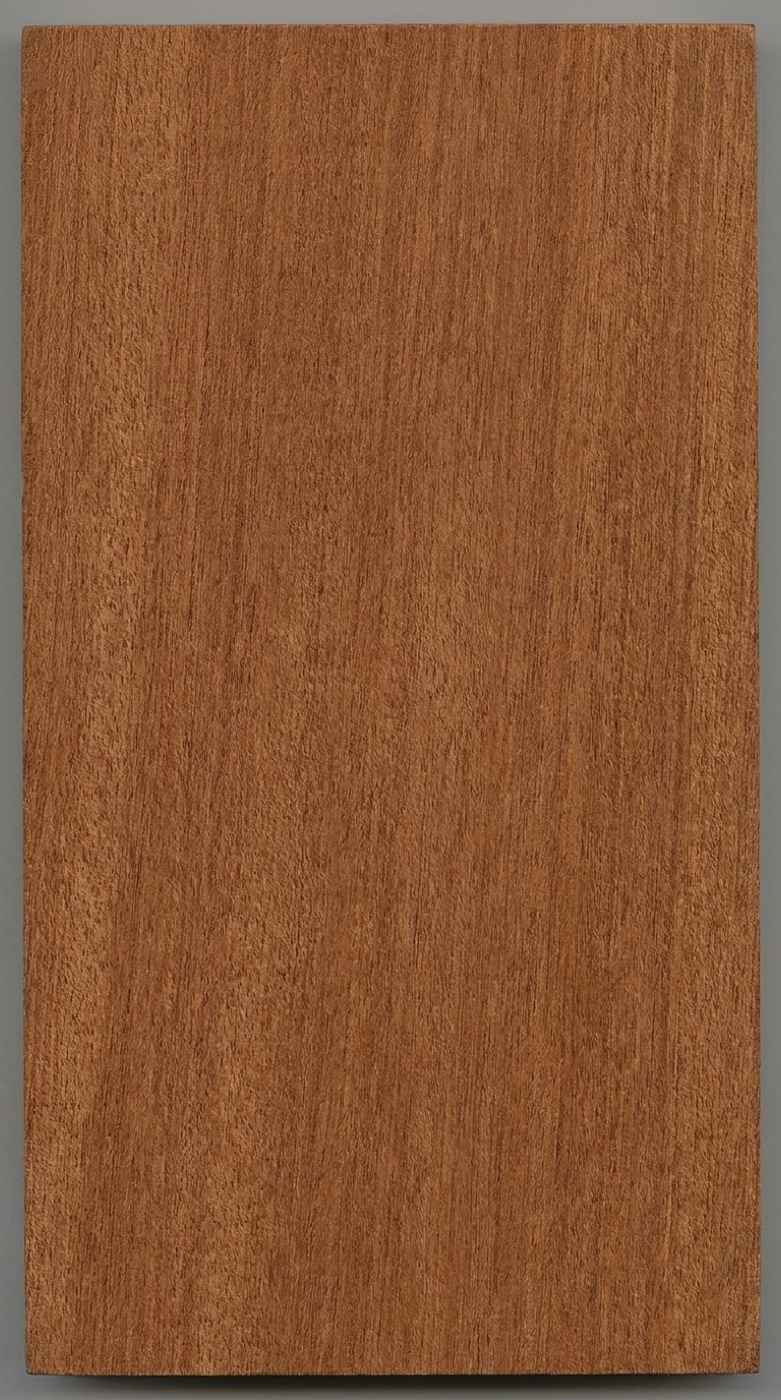
Raw Wood: A board of Dark Red Meranti -- uniform reddish brown with a coarse, open-pored texture and a faint ribbon stripe from its interlocked grain