

Wood Species
Redwood
Sequoia sempervirens
- Janka hardness
- 450 lbf
- Specific gravity
- 0.4
- Workability
- Very easy -- soft, straight, and stable; brittle enough to split and soft enough to bruise
Coast redwood is a west-coast exterior softwood with an unusual combination of properties: it's very light, exceptionally stable dimensionally, naturally rot resistant, and available in genuinely enormous clear widths — the trees are, after all, the tallest on Earth.
That stability is its real advantage over cedar. Redwood has very low shrinkage and moves less with humidity than nearly any other softwood, which is why it was the standard for outdoor furniture, hot tubs, water tanks, and wide siding boards that had to stay put.
Old growth, second growth, and the honest version
The redwood that built the reputation was old-growth: dense, dark, heartwood-rich, and extraordinarily durable. Almost all of it is gone — old-growth coast redwood forest is down to roughly 5% of its original extent, and most of what remains is protected.
What's sold now is second-growth, which is lighter in color, faster grown, and contains far more non-durable sapwood. It is a decent exterior wood. It is not the legendary one, and marketing that leans on redwood's historical durability is describing a product you can't buy new. Reclaimed old-growth redwood, salvaged from demolished structures and water tanks, is the real material and is priced as a specialty item.
Given all that, this is a wood worth buying with some attention to sourcing — certified second-growth from managed forests is straightforward to find, and it's a reasonable thing to ask about.
Working it
- Soft and easily bruised. Clamp with cauls. Not a wearing surface.
- Brittle and splitty, especially near edges and around the ends. Predrill fasteners, and use stainless or hot-dipped galvanized: redwood's tannins corrode plain steel and stain black around the fastener.
- Straight grained and easy to cut, with minimal tearout.
- Very stable — the property that actually justifies choosing it.
Burl
Redwood burl is a distinct and heavily used decorative material — dense, wildly figured, and turned or sliced into veneer. It comes from the burls that form at the base of the trees and can be harvested without felling them, which is part of why it stayed available.
Finishing
Left bare outdoors it weathers to gray. Under an exterior finish it holds its reddish color for as long as you keep reapplying. Its extractives bleed through paint, so prime with a stain-blocking primer. Indoors, oil deepens it considerably.
Typical Uses
Outdoor furniture, decking, siding, trim, hot tubs and tanks, fencing, veneer and burl turning, and — historically — a very great deal of California construction.
Images
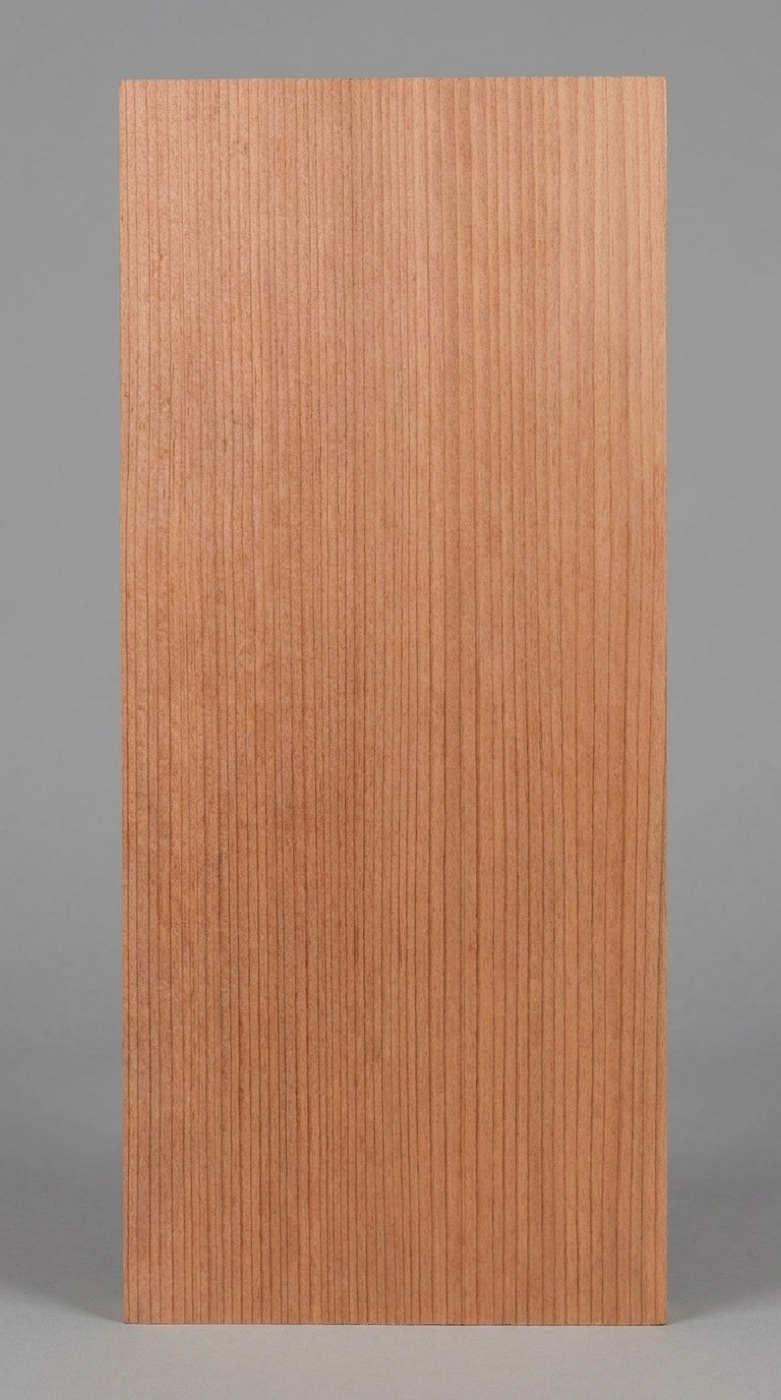
Raw Wood: A board of redwood -- pinkish to reddish brown, straight grained and coarse textured