

Wood Species
Timborana
Pseudopiptadenia spp. (sources vary)
- Janka hardness
- 1570 lbf
- Specific gravity
- 0.7
- Workability
- Good stability, resistant to fungus and termites
Timborana is a South and Central American hardwood sold under several flooring-trade aliases, including Brazilian Pearwood and Brazilian Oak. Sources can't even agree on its exact genus — some list Pseudopiptadenia psilostachya, others Piptadenia suaveolens or Enterolobium schomburgkii — most likely because several closely related species get lumped under one commercial name and nobody's bothered to sort it out.
Appearance
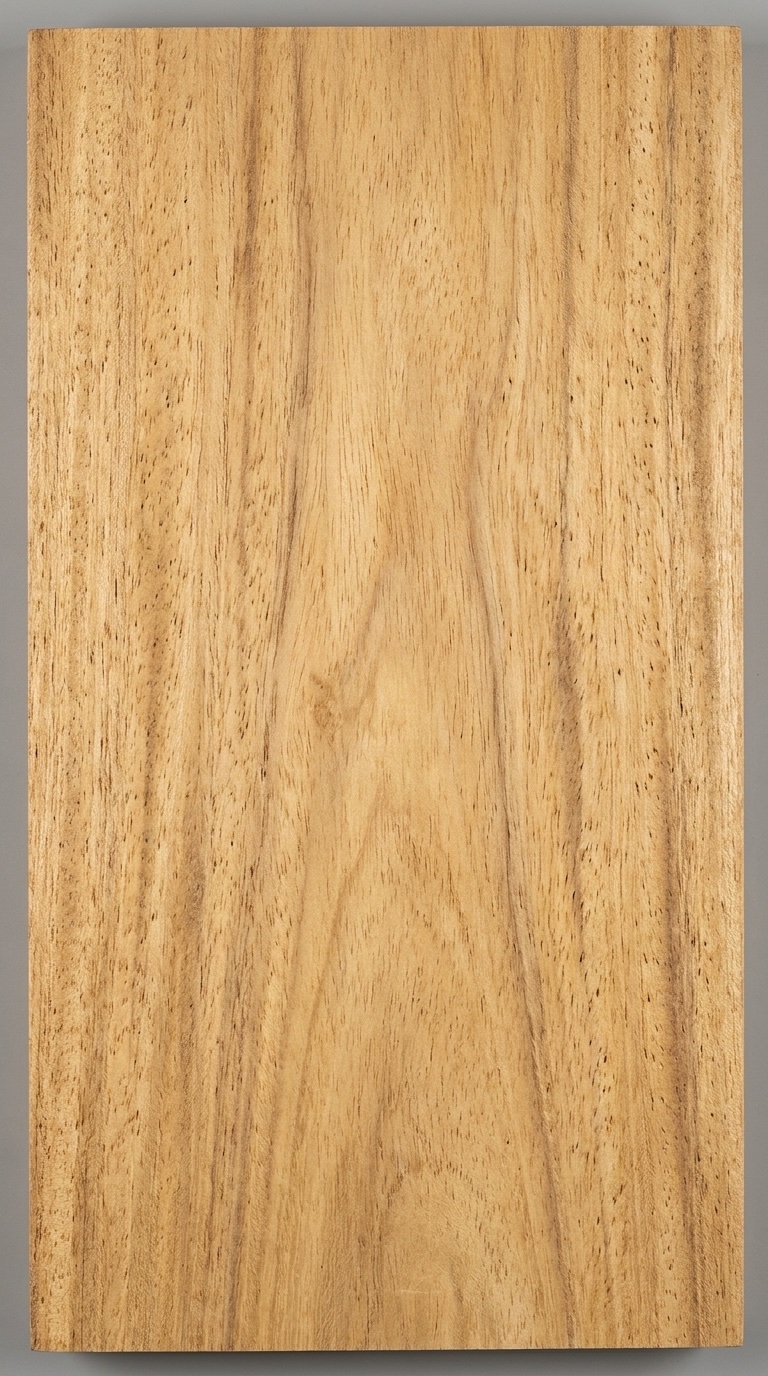
Sapwood runs yellow to cream; heartwood starts light yellow with occasional darker streaks, giving new boards a luminous, almost glowing quality. As a floor ages, light reddish tones creep in.
Working Properties
Timborana carries moderate resistance to fungus and termites and an excellent stability rating — it moves noticeably less with seasonal humidity than most tropical hardwoods, a real practical win for flooring specifically.
Typical Uses
Flooring, almost exclusively.
Images
Raw Wood: A board of Timborana -- creamy yellow to light-medium brown, with the visible open pores and interlocked grain typical of this wood.