

Wood Species
Western Red Cedar
Thuja plicata
- Janka hardness
- 350 lbf
- Specific gravity
- 0.37
- Workability
- Very easy to cut and shape; brittle, splintery, and soft enough that it bruises under a clamp
Western red cedar is not a true cedar — it's a Thuja, in the cypress family — and it is the standard exterior softwood across the Pacific Northwest and much of North America. Decking, siding, fencing, shingles, greenhouse framing, outdoor furniture, and saunas are all built from it, for one main reason: it resists rot without any chemical treatment at all.
Why it doesn't rot
The heartwood contains natural fungicidal compounds called thujaplicins, which is why untreated cedar shingles last decades on a roof and cedar fence boards outlast pine several times over. Two important qualifications:
- Only the heartwood is durable. The pale sapwood is not, and boards containing a lot of it will fail early. Look at what you're buying.
- Durability isn't hardness. Cedar resists decay brilliantly and abrasion terribly. It's a poor decking surface if the deck sees heavy traffic, dog claws, or dragged furniture, and a poor choice for anything with a wearing surface.
Working it
- It's very soft — 350 lbf, among the softest commercially available lumber. Clamps leave marks. Use cauls.
- It's brittle and splinters. Cedar splits under nails driven near an edge, so predrill, and use stainless or hot-dipped galvanized fasteners: cedar's natural acids corrode plain steel and the resulting black staining bleeds through the finish.
- It's very stable, with low shrinkage — one of the reasons it makes good siding and good sauna benches.
- The dust is a known irritant and respiratory sensitizer, more so than most softwoods. Wear a respirator, not just a dust mask.
Grades matter more than usual
Cedar is sold in a wide grade range, and the difference is enormous. Clear vertical-grain heart cedar is a beautiful, stable, expensive material. Knotty construction-common cedar from a big-box store is a different product, cheaper, full of knots, and often containing sapwood. Neither is wrong; know which you're buying.
Finishing
Cedar left bare weathers to a silver gray, which many people want deliberately. If you don't, it needs a UV-blocking exterior finish reapplied on a schedule, because clear film finishes fail fast outdoors.
Its extractives will bleed through paint and light finishes and stain them brown, so seal with a stain-blocking primer before painting. Indoors, cedar's aroma and color hold up well under a simple clear finish.
Typical Uses
Siding, shingles and shakes, decking, fencing, exterior trim, outdoor furniture, greenhouses, saunas, boat building, and canoe strip-building.
Images
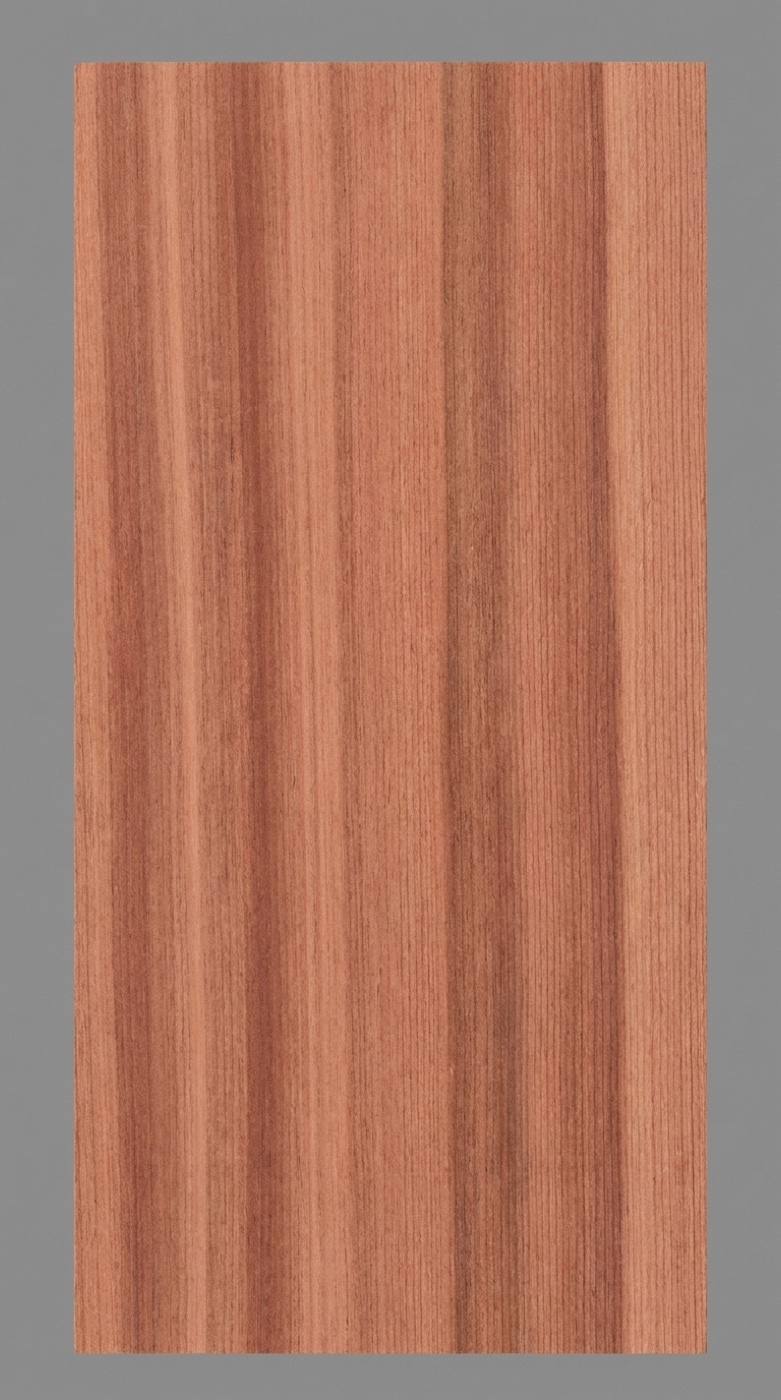
Raw Wood: A board of western red cedar -- reddish brown with the irregular tonal banding typical of the species