

Accessories
Setup Blocks
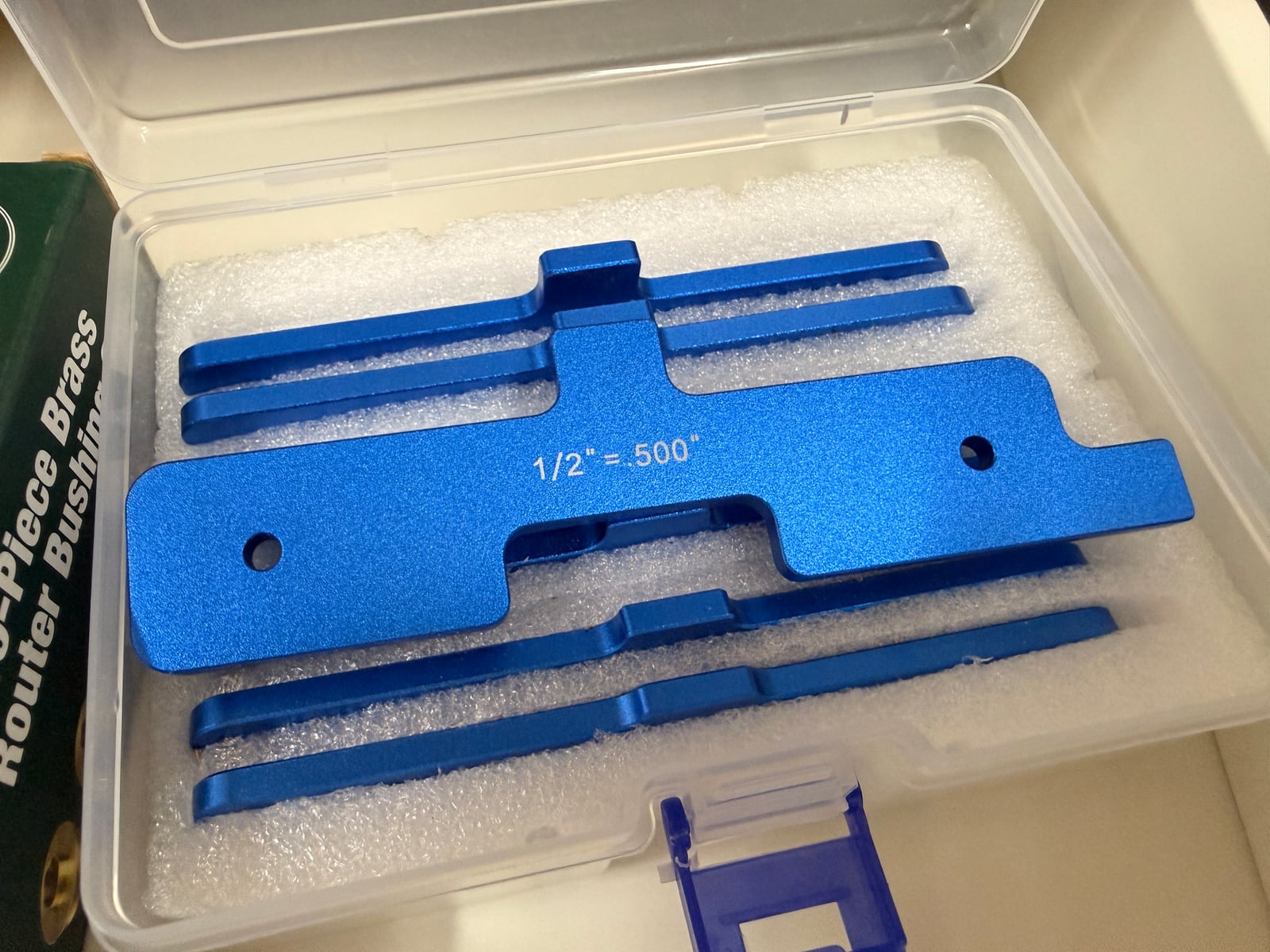
A setup block is a chunk of metal machined to an exact, known thickness -- 1/8in, 1/4in, 3/8in, 1/2in and so on, usually with the fraction and its decimal equivalent engraved on the face. You use it to set a cutter height or a fence offset by reference rather than by measurement.
Why this beats a ruler
Setting a dado to exactly 1/4in deep with a tape measure means holding a rule against a spinning-tool table, sighting across the top of a tooth, and estimating. It is genuinely difficult to do better than about 1/64in that way, and the error is invisible until the joint is cut.
With a block you raise the cutter until the block just slips over it -- or just contacts, depending which reference you are using. Touch is far more sensitive than sight. You can feel a thousandth of interference; you cannot see one.
Using them
- Set to a slip fit, not a jam. The block should pass with a whisper of contact. Forcing it means the cutter is low.
- Power off, and unplugged for anything near a blade. This is a hands-near-the-cutter operation.
- The step is the reference on stepped blocks. Hook the step over the table or fence so the block registers positively rather than being held.
- They set fence offsets too, not just heights -- a block between fence and blade sets a rip width just as well.
- Check them once against a caliper. Good blocks are accurate to a thousandth. Cheap ones sometimes are not, and a block you trust that is wrong is worse than no block.
What they are not
Setup blocks are not gauge blocks in the metrology sense, and they are not a substitute for cutting a test piece. On anything where the fit matters -- a tenon, a groove for a panel -- set with the block, then cut a scrap and check. The block gets you right the first time far more often; it does not remove the test cut.
Images
Product: A set of anodised aluminium setup blocks, each step machined to a stated dimension and marked with its fraction and decimal equivalent.