

Accessories
Track Saw Square
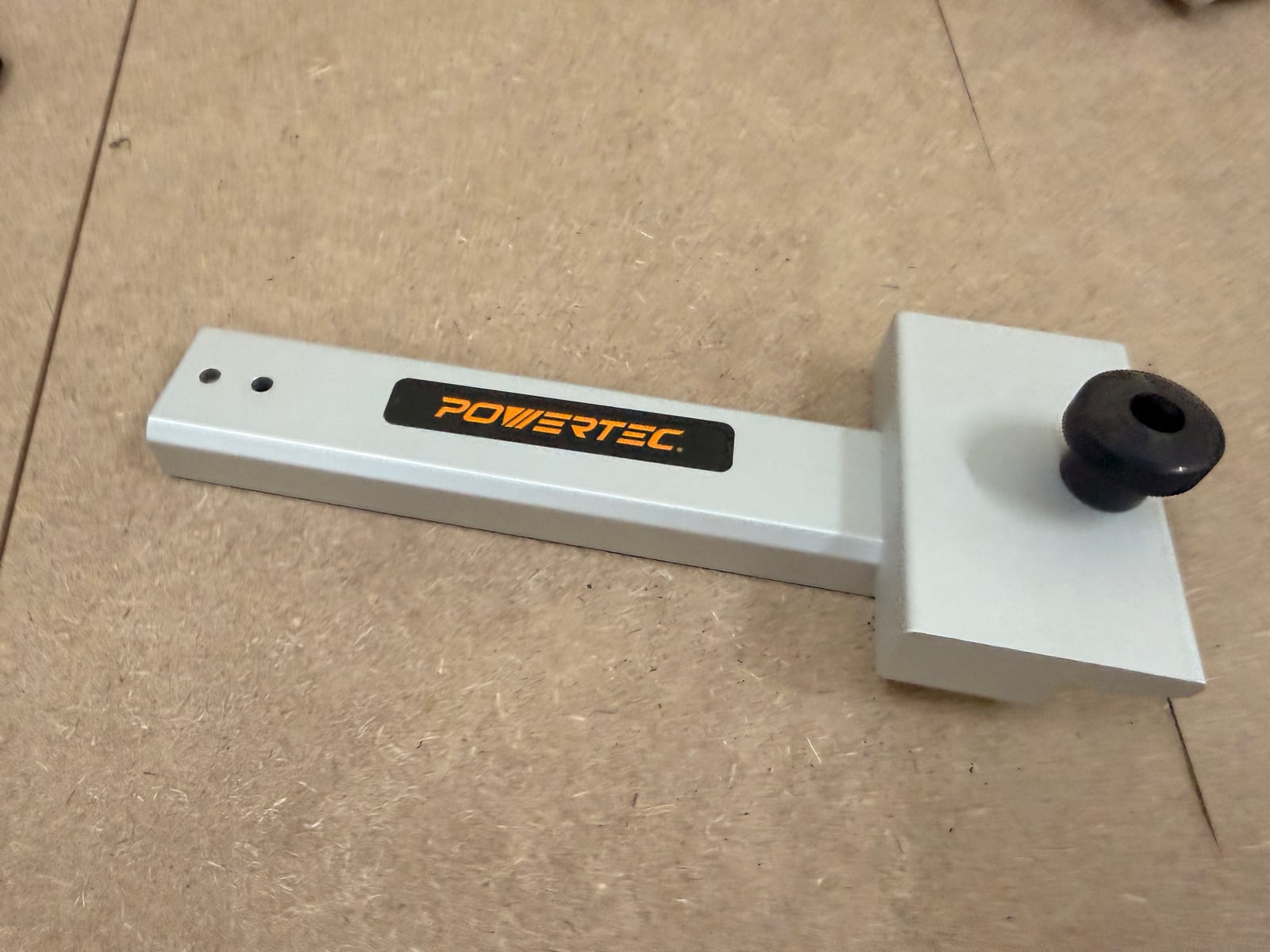
A track saw square is an L-shaped fixture that indexes a guide rail square to the workpiece edge. The head hooks over the edge of the sheet, the long arm butts against the rail, and the rail is now perpendicular -- no measuring from two corners, no diagonal check, no creeping error.
The problem it solves
Squaring a rail by measurement means marking equal offsets at both ends of the cut and aligning the rail to those marks. On an 8ft sheet, a 1mm error at one mark is a visible out-of-square across the panel, and it compounds: every subsequent cut references an edge that was not actually square.
The square removes the measurement entirely. It is a reference, not a calculation.
What to look for
- Actual squareness, which is worth verifying rather than assuming. Clamp it, cut a test piece, flip one half and butt the cut edges together -- any error doubles and becomes obvious. A square that is out is worse than no square.
- Enough arm length to register the rail reliably. A short arm amplifies any play.
- A head that positively hooks the edge rather than just touching it.
- Compatibility with your rail profile. Rails are not standardised across brands.
Using it
Register the head against a known straight edge. Factory sheet-good edges are usually straight but not guaranteed, and they are frequently damaged in transit. If the reference edge is suspect, take a skim cut off it first and use that.
Hold or clamp the square while positioning the rail, then clamp the rail with rail clamps before removing the square -- the rail's grip strips hold it against sliding, not against being knocked.
Images
Product: A track saw square, with the long arm registering against the guide rail and the head hooking over the edge of the sheet.