

Wood Species
Sitka Spruce
Picea sitchensis
- Janka hardness
- 510 lbf
- Specific gravity
- 0.42
- Workability
- Cuts and planes cleanly; soft, easily bruised, and unforgiving of dull tooling
Sitka spruce is the one spruce worth knowing individually, and the reason is a single number: it has among the highest stiffness-to-weight and strength-to-weight ratios of any commercially available timber. Pound for pound, very little else is as strong.
Note that you cannot buy this at a home center. Spruce reaches the general lumber market inside the SPF grading group, mixed with pine and fir and sorted by structural grade rather than species. Sitka spruce is bought from specialty suppliers — tonewood dealers, aircraft-grade suppliers, boat builders — graded and priced on entirely different criteria.
Soundboards
Sitka is the default soundboard wood for steel-string acoustic guitars, and it's used for piano soundboards, violin tops, harps, and mandolins. The reason is the same stiffness-to-weight property: a soundboard needs to be as light as possible while still resisting the enormous string tension pulling on it, and to transmit vibration efficiently rather than damping it.
Tonewood grading is its own world, and it's worth understanding what you're paying for:
- Quartersawn, always — the growth rings must run perpendicular to the face for stiffness across the plate.
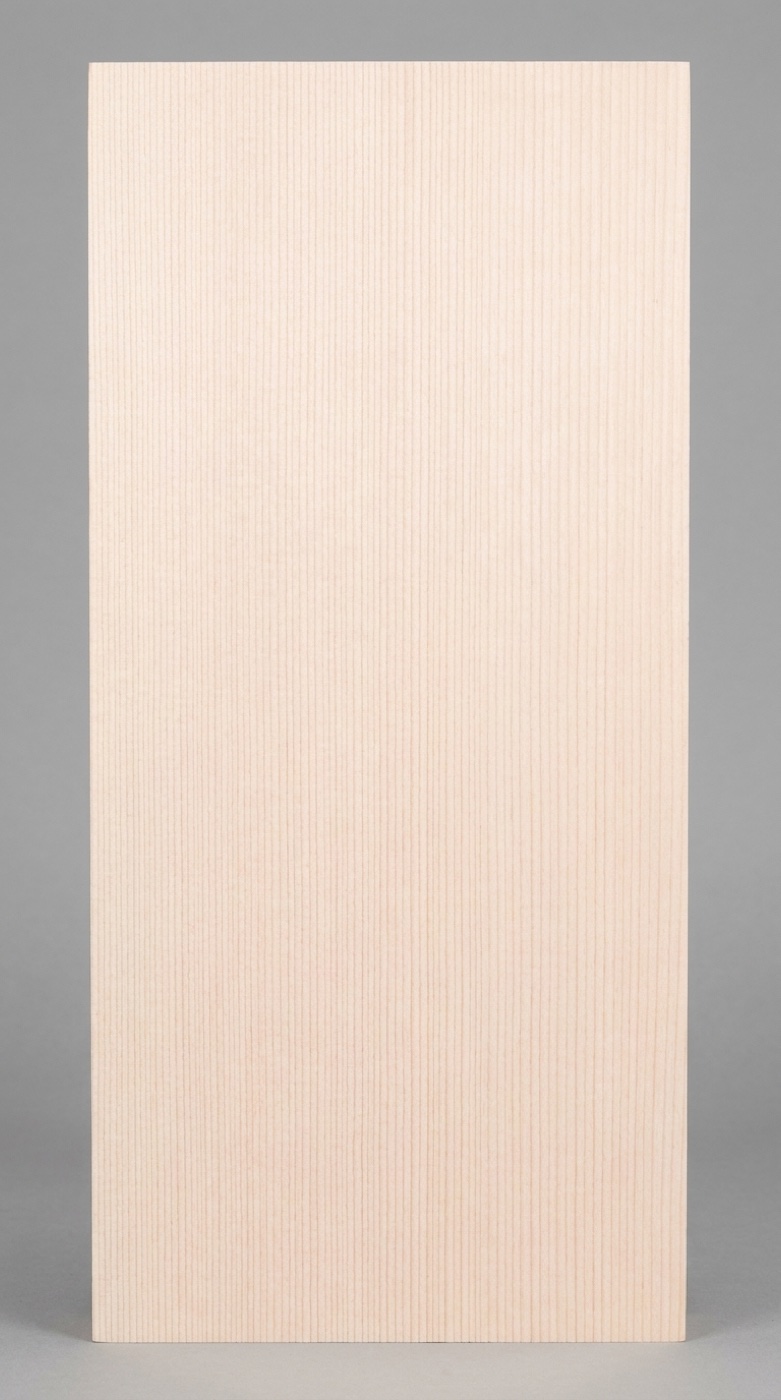
- Tight, even grain. Grade is largely about growth rings per inch and how consistent they are. AAA stock has many rings per inch, dead straight and evenly spaced.
- Runout. The grain must run parallel to the face along the length, not diving through it. Runout weakens the plate regardless of how the surface looks.
- Bearclaw figure — a rippled, claw-marked look — is cosmetic, prized, and priced up.
Aircraft
Sitka spruce framed most early aircraft, including the Wright Flyer and vast quantities of WWI and WWII airframes, for exactly the same reason it makes soundboards. "Aircraft grade" remains a real specification, with strict requirements on grain, runout, and defects, and it's still used in homebuilt and vintage aircraft restoration.
Working it
- Soft at 510 lbf, and it bruises under clamps. Use cauls.
- Planes beautifully with a sharp iron, taking a glassy surface — one of the genuine pleasures of instrument work.
- Unforgiving of dull tooling, which crushes the soft fibers rather than cutting them.
- Splits easily along the grain; predrill anything near an edge.
- Not durable outdoors and non-resistant to decay.
Finishing
Pale and thirsty, and it blotches under pigment stain in the usual softwood way — though almost nobody stains it, since it's chosen for what it does rather than how it looks. Instrument finishes are thin by design, to avoid damping the top. See the Finish Simulator.
Typical Uses
Guitar, piano, violin and harp soundboards, aircraft structures, boat spars and oars, ladders, glider construction, and — in lower grades — general construction and paper pulp.
Images
Raw Wood: A quartersawn board of Sitka spruce -- the tight, straight, evenly spaced grain that soundboard grading is built around