

Wood Species
Holly
Ilex opaca
- Janka hardness
- 1020 lbf
- Specific gravity
- 0.64
- Workability
- Cuts and carves cleanly; stains blue-gray at the drop of a hat if it isn't dried exactly right
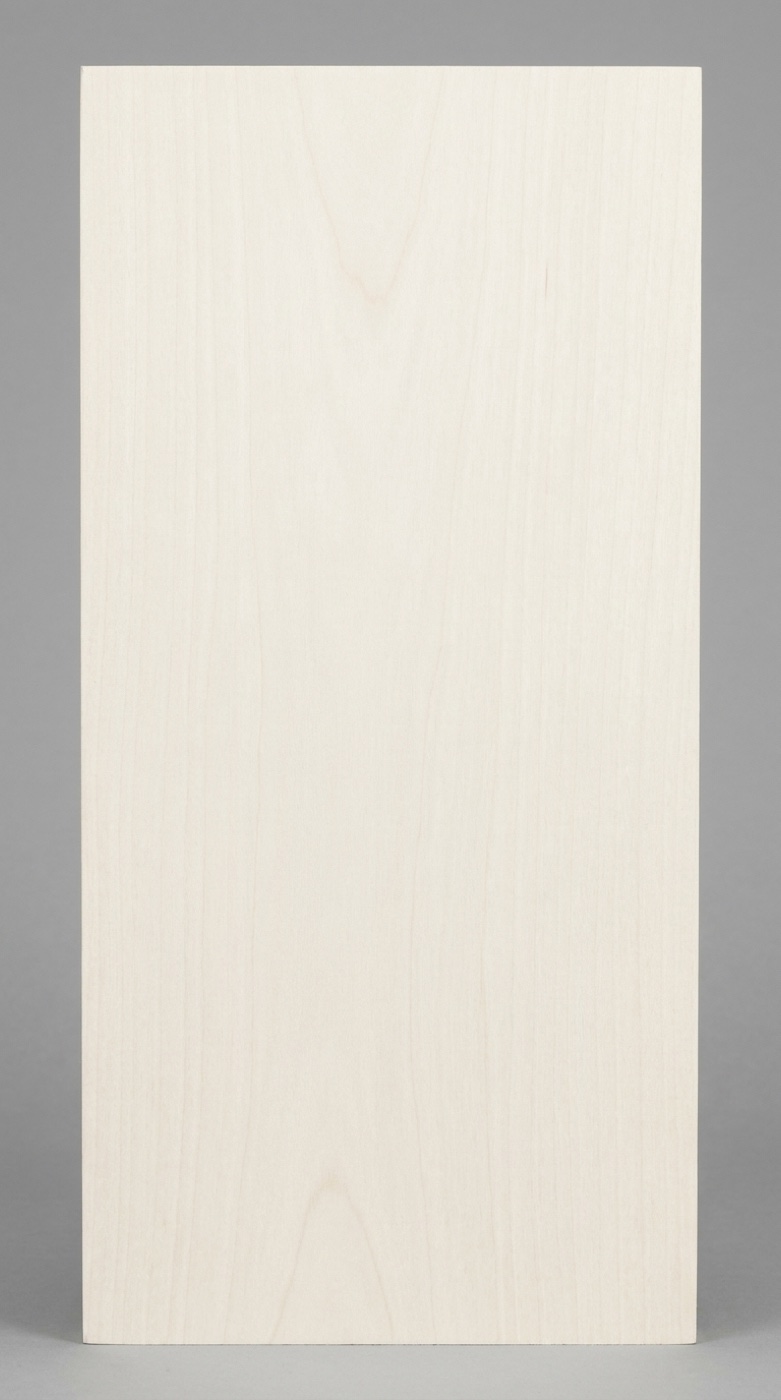
Holly is the whitest wood available commercially — a near-ivory, almost chalk-white with essentially no visible grain figure. Nothing else comes close, which is why it survives as a specialty wood despite being small, scarce, expensive, and difficult to dry.
Where it's used
Anywhere something needs to read as white rather than pale:
- Inlay and stringing, particularly against dark woods. The classic pairing is holly against ebony — maximum contrast, both fine-textured, both taking crisp detail.
- Marquetry, where it plays the whites and highlights.
- Piano keys, historically, as an ivory substitute.
- Dyed black as an ebony substitute, oddly enough — its blank, even texture takes dye uniformly, so black-dyed holly is used for fingerboards and fittings where real ebony is unavailable or unaffordable.
- Scroll and fretwork, and small turned objects.
The drying problem
This is the whole difficulty with holly, and it's why it costs what it does.
Holly is extremely susceptible to fungal staining — a blue-gray discoloration that develops in the wood within days if it isn't dried fast and correctly. A stained board is not white, and white is the entire product.
Getting it right means felling in winter when sap is low, milling immediately, and kiln drying quickly, usually within days. Any delay and the batch is compromised. Some suppliers end-coat and freeze logs to buy time. The result is that genuinely white holly is a specialty product from suppliers who have deliberately set up to produce it, sold in small pieces at high prices, and worth buying from someone who knows what they're doing.
Working it
- Moderately hard at 1,020 lbf with a very fine, even, diffuse-porous texture and no meaningful grain direction — it cuts cleanly in any direction, much like basswood but considerably harder.
- Takes crisp detail, which is why it works for fine inlay and fretwork.
- It moves a lot. High shrinkage and a tendency to warp; use it in small pieces, which is how it's sold anyway.
- Not durable — strictly an interior wood.
Finishing
Here's the catch: most finishes yellow, and yellowing a wood chosen for being white defeats the purpose. Oil-based finishes and oil-modified polyurethane amber noticeably. Use a water-based finish, or blonde dewaxed shellac, and expect some warming regardless. See the Finish Simulator.
Typical Uses
Inlay, stringing and marquetry, dyed-black instrument parts, piano keys, scroll and fretwork, turned objects, brush backs, and small carvings.
Images
Raw Wood: A board of holly -- the near-white, nearly grainless surface that makes it the inlay wood of choice