

Techniques & Joinery
Common joints and techniques, and when to use them.
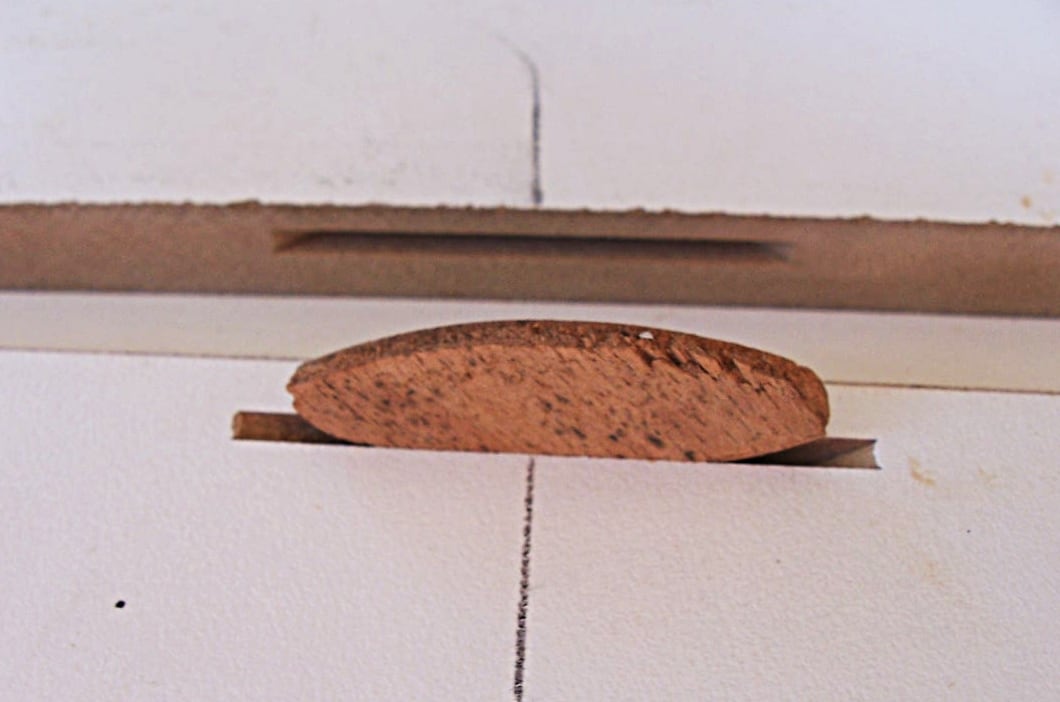
Biscuit Joinery
Football-shaped wafers of compressed wood, glued into matching slots -- less about strength than about keeping panels aligned while the clamps go on.
Box Joint (Finger Joint)
Interlocking rectangular fingers cut across a corner -- a dovetail's strength without the angled layout, at the cost of the dovetail's mechanical pull resistance.
Bridle Joint
An open-sided mortise and tenon -- the tenon exposed on both edges rather than buried inside a closed mortise, trading some strength for a joint that's far easier to fit and adjust.
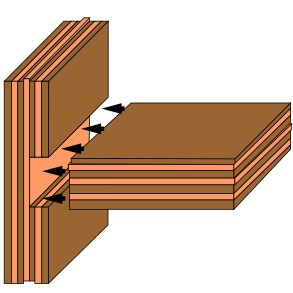
Butt Joint
Two flat faces pressed together and fastened -- the simplest joint there is, and honest about exactly how weak that simplicity makes it.
Cope-and-Stick Joint
The matched router-bit pair that builds a frame-and-panel door -- one cut sticks a profile onto the rails and stiles, the other copes the ends to interlock with it.
Dado Joint
A slot cut across the grain that a shelf drops straight into -- the joint that makes a bookcase hold real weight without a single screw showing.
Dovetail Joint
The joint that shows off -- interlocking angled pins and tails strong enough to hold a corner together before a drop of glue ever touches it.

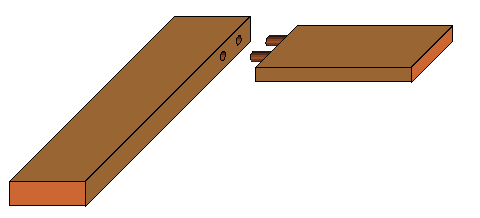
Dowel Joinery
Round wooden pins glued into matching drilled holes -- the oldest loose-tenon idea there is, still cheap and still strong when the holes actually line up.
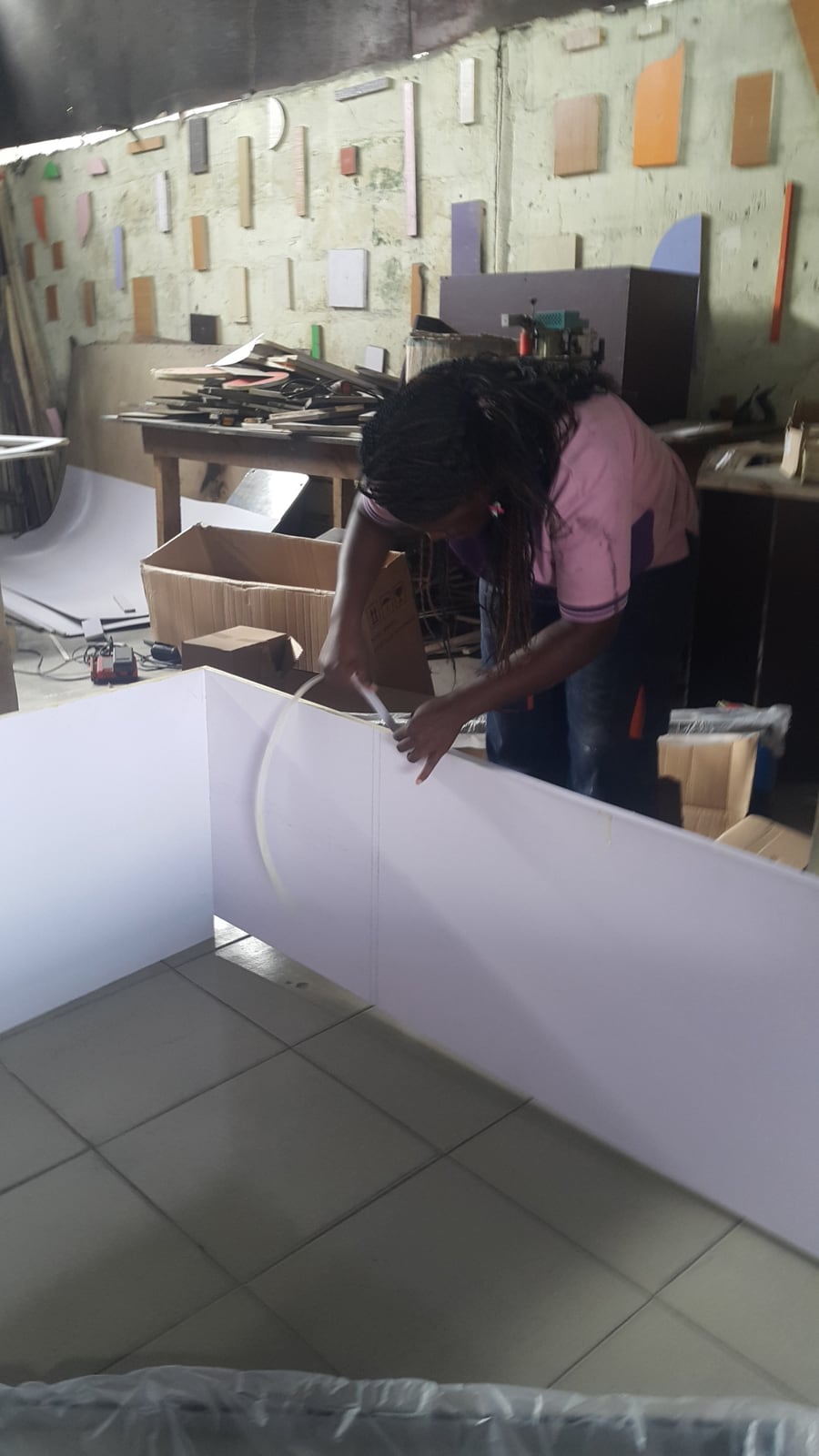
Edge Banding
A thin strip glued over a sheet good's raw edge -- not a joint between two boards, but the technique that makes plywood and MDF furniture look solid.
Edge Gluing (Panel Layup)
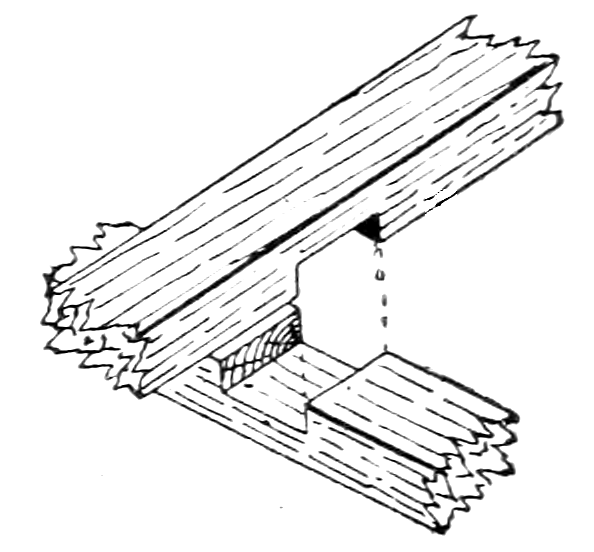
Gluing narrower boards edge to edge into one wide panel -- the reason a dining table top isn't a single tree-width slab, and doesn't need to be.
Frame and Panel
A floating center panel captured inside a solid-wood frame -- the construction that lets a wide wood surface move with the seasons instead of splitting.
Groove Joint
A channel cut into the middle of a board's face, not its edge -- the standard way a cabinet's plywood back or a drawer's bottom panel gets captured.

Half-Lap Joint
Remove half the thickness from each of two boards and they overlap flush -- simple to cut, genuinely strong, and no thicker than either board alone.
Lock-Miter Joint
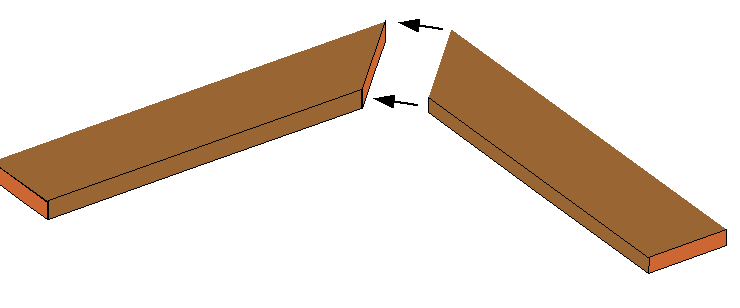
A single interlocking router-bit profile that combines a 45-degree miter with real mechanical strength -- a beautiful joint to look at and a genuinely fussy one to set up.

Miter Joint
Two pieces cut at matching angles to hide all the end grain -- clean-looking, mechanically weak, and almost always worth reinforcing.
Mortise and Tenon Joint
A tongue (tenon) fit into a matching cavity (mortise) -- unfashionably old, and still the joint most chairs are betting your weight on.
Pocket Hole Joinery
An angled, self-tapping screw joint that trades joinery elegance for speed -- the right call more often than the purists let on.
Rabbet Joint
An L-shaped step cut into a board's edge or end -- the joint behind most drawer boxes and cabinet backs, simple to cut and stronger than a plain butt joint.
Shiplap Joint
Rabbeted board edges that overlap rather than butt -- siding and paneling's answer to covering a wide span without a floating panel's complexity.
Spline Joinery
A thin strip of wood let into matching slots across a seam -- the standard fix for a joint, like a miter, that looks clean and holds together badly on its own.
Tongue and Groove Joint
A protruding ridge on one board slides into a matching channel on the next -- the joint behind flooring, paneling, and a lot of self-aligning panel work.
Turning
Spinning a wood blank against a stationary cutting edge on a lathe -- the technique behind every round tool handle, bowl, chair leg, and spindle.
Wainscoting
Wood paneling covering the lower portion of a wall -- traditionally frame-and-panel, functionally there to protect the wall from the daily abuse a room's lower few feet actually takes.